
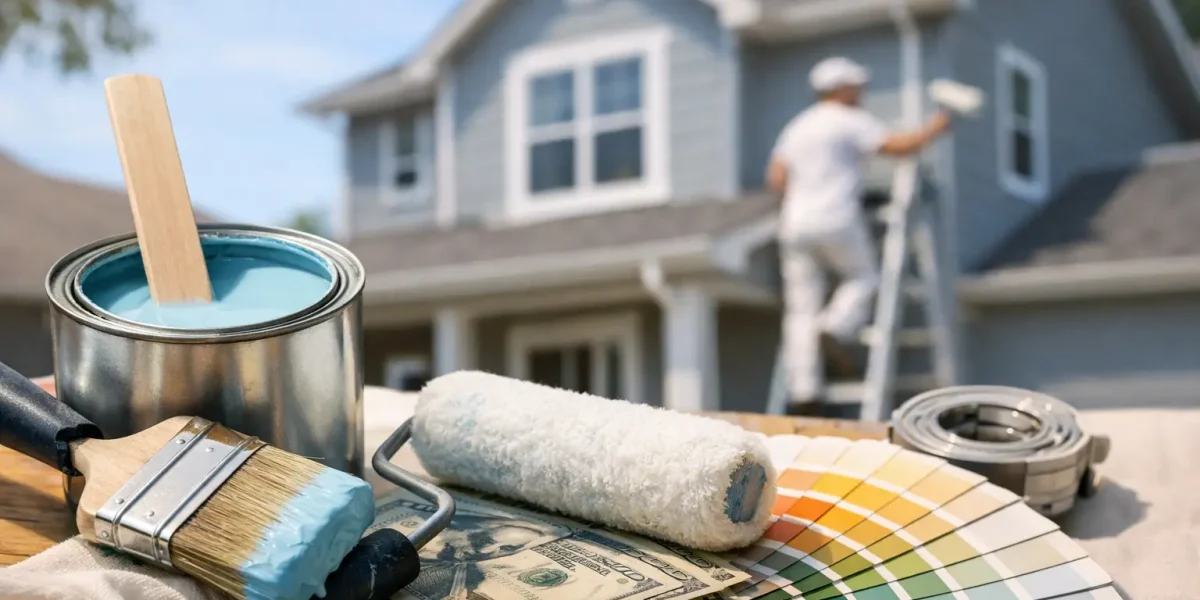
A fresh paint job can make a home look newer, cleaner, and better cared for almost immediately. But when homeowners start planning a project, the first question is usually the same: how much does house painting cost? The honest answer is that price depends on the size of the home, the condition of the surfaces, the type of paint, and how much prep work is needed before the first coat ever goes on.
In the Phoenix area, those details matter even more. Intense sun, heat, dust, stucco exteriors, and HOA expectations all affect the scope of work. A quick online number may give you a rough idea, but a reliable estimate comes from understanding what is actually included in the job.
How much does house painting cost for most homes?
For many homeowners, interior or exterior painting falls somewhere between a few thousand dollars and well into five figures, depending on the project. A smaller interior repaint with standard walls and minimal repairs will cost far less than a full exterior repaint on a larger two-story stucco home with fading, cracking, and detailed trim.
That wide range is why square footage alone never tells the full story. Two homes can be the same size on paper and still have very different painting costs. One may have smooth walls in great condition. The other may need patching, sanding, caulking, masking, and extra coats to get a consistent finish.
As a general rule, interior painting is often priced by wall space, ceiling height, room count, and finish details. Exterior painting is more affected by accessibility, substrate condition, sun exposure, and the amount of preparation needed to make the finish last.
What affects house painting cost the most?
The biggest cost drivers are labor, prep work, and materials. Homeowners sometimes focus on the paint itself, but most of the value in a professional project comes from the work done before and during application.
Surface condition
If walls are clean, smooth, and previously painted in a similar color, the job is more straightforward. If there are nail holes, drywall damage, peeling paint, stains, cracks, or water marks, the crew has more to do before painting starts. On exteriors, damaged caulking, chalky surfaces, wood rot, or failing prior coatings add time and material.
Prep is not the glamorous part of the project, but it is where durability begins. Skipping it may lower the initial price, but it often leads to early failure, uneven appearance, and more repainting sooner than expected.
Home size and layout
Larger homes naturally require more labor and paint, but layout matters too. Open-concept interiors, vaulted ceilings, stairwells, high entry walls, and detailed trim all increase complexity. On the exterior, multiple stories, hard-to-reach elevations, balconies, shutters, and architectural features can raise the cost beyond what square footage alone suggests.
Paint quality and product selection
Not all paints perform the same, especially in Arizona. Premium exterior products designed for UV resistance and adhesion generally cost more, but they tend to hold color and finish better under intense sun. Interior products also vary depending on washability, sheen, stain resistance, and the type of room being painted.
This is one place where trade-offs matter. A lower-cost paint can reduce the upfront estimate, but it may not cover as well or last as long. Better products often mean better long-term value, particularly on heavily used interiors and sun-exposed exteriors.
Color changes and coverage
If you are painting over a similar shade, coverage is usually more efficient. If you are going from dark to light, light to dark, or from a bold accent color to a neutral finish, you may need additional coats or primer. That affects both labor and material cost.
The same goes for exteriors. Deep colors, bright whites, and major color shifts often require more attention to achieve an even result.
Interior house painting costs: what changes the price?
Interior estimates are shaped by more than just the number of rooms. Ceilings, baseboards, doors, closets, crown molding, and wall texture all influence the final price.
A simple repaint of occupied living spaces can be fairly efficient when furniture is easy to move and surfaces are in good shape. But homes with extensive trim, built-ins, damaged drywall, or strong color changes require more time. Kitchens and bathrooms can also take extra care because of moisture, grease, and tighter spaces.
Cabinets are another category altogether. Painting or refinishing cabinets involves cleaning, degreasing, sanding, priming, and careful finish work. It is more detailed than standard wall painting, which is why cabinet projects are typically priced separately.
For homeowners preparing to sell, interior painting is often one of the most cost-effective updates because it improves first impressions quickly. For long-term homeowners, the focus is usually more on finish quality, durability, and getting the right color flow throughout the home.
Exterior house painting costs in Phoenix
Exterior painting in the Phoenix metro area comes with its own set of conditions. Sun damage is a major factor. South- and west-facing walls often wear faster, and faded stucco or blistered trim may need more prep before repainting.
Most local homes have stucco exteriors, and stucco behaves differently than wood or siding. It is porous, textured, and can absorb more material. Cracks may need to be filled, and pressure washing or surface cleaning is often needed before primer or paint is applied.
Homes with wood trim, fascia, garage doors, wrought iron, or decorative accents may also involve multiple product types. Each surface needs the right preparation and coating system. That adds to the scope, but it also helps protect the home and improve the final appearance.
If your home is in an HOA community, color approvals and appearance standards may affect the project timeline. That does not always change the painting cost directly, but it is part of planning the job correctly.
Why one estimate can be much lower than another
If you get multiple bids, you may notice a significant price gap. That does not automatically mean one contractor is overcharging or another is giving you a better deal. It often means the estimates are not including the same level of service.
One quote may cover full masking, crack repair, premium paint, two finish coats, cleanup, and a final walkthrough. Another may include minimal prep, lower-grade materials, and fewer protections for surrounding surfaces. On paper, both may say “paint house,” but the scope can be very different.
This is why homeowners should ask what is actually included. Prep standards, number of coats, brand and line of paint, repair allowances, and cleanup expectations all matter. A lower bid can become more expensive later if touch-ups, early repainting, or missed details become a problem.
How to budget for a painting project
The best way to budget is to decide what matters most before requesting estimates. If your priority is long-term durability, say so. If you need a clean, updated look before listing the home, that is a different conversation. If the project includes cabinets, garage doors, pool deck coatings, or specialty finishes, those should be discussed early so the estimate reflects the true scope.
It also helps to think in phases if needed. Some homeowners repaint the most visible exterior areas first, then schedule secondary surfaces later. Others handle main living areas now and save bedrooms or trim work for a future phase. A good contractor can help build a plan that fits both the property and the budget.
In many cases, the smartest investment is not the cheapest option. It is the project that balances proper prep, dependable scheduling, quality materials, and workmanship that holds up over time.
How much does house painting cost when you hire professionals?
When you hire professionals, you are paying for more than paint on the wall. You are paying for jobsite protection, surface preparation, product knowledge, safe ladder work, clean lines, consistent coverage, and accountability from start to finish.
That matters on both residential and commercial properties. A professional crew should arrive on schedule, communicate clearly, protect the property, and leave the space clean. The difference shows up not only in the final appearance but also in how smoothly the project runs.
For homeowners and property managers in Phoenix, a detailed estimate is the most reliable place to start. An experienced local contractor can evaluate the surfaces, explain the options, and help you understand where the investment is going. At Right Choice Painting, that means looking at the full picture so the result is built around quality, durability, and a finish you feel good about every time you pull into the driveway or walk through the front door.
A painting project should not leave you guessing. When the scope is clear and the work is done right, the cost makes a lot more sense – and so does the value.