
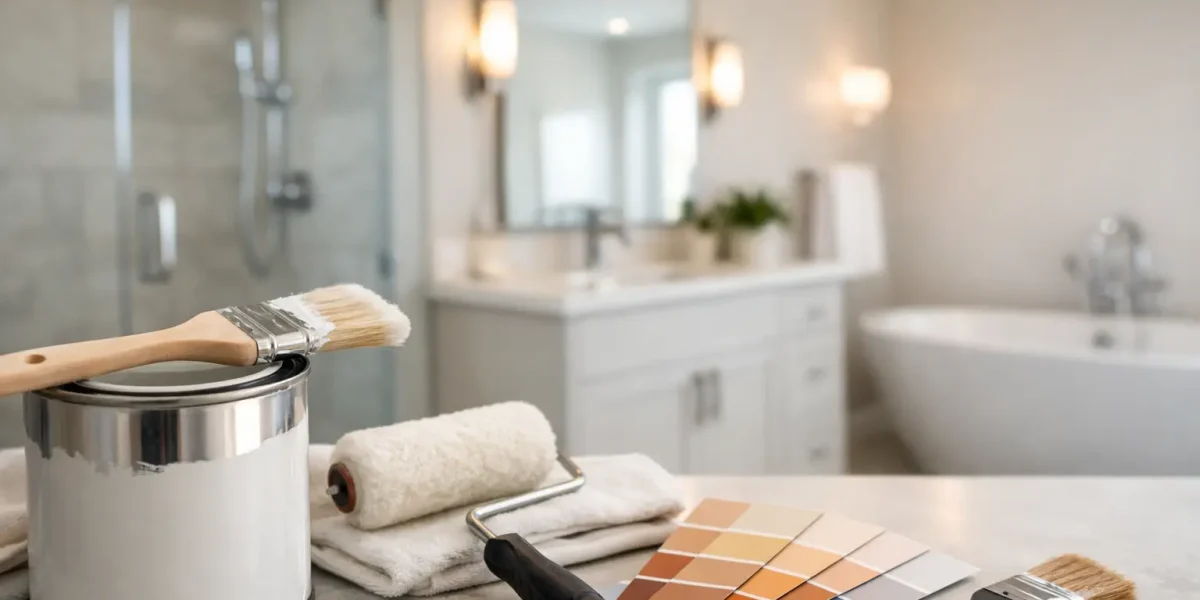
A bathroom can look freshly remodeled on day one and tired six months later if the paint finish is wrong. When homeowners ask about the best paint finishes for bathrooms, they are usually dealing with the same concerns: moisture, streaks, mildew, and walls that need to be cleaned more often than other rooms in the house. The finish matters just as much as the color.
In Phoenix-area homes, bathrooms may not face the same heavy humidity as coastal climates, but they still deal with steam, splashes, cleaning products, and daily use. Powder rooms, guest baths, and busy family bathrooms all perform differently, which is why there is no one-size-fits-all answer. The right finish depends on how the room is used, what surface is being painted, and how much durability you want over time.
Why paint finish matters in a bathroom
Paint finish refers to sheen – how much light the painted surface reflects. That sheen affects more than appearance. In a bathroom, it influences how well the walls resist moisture, how easy they are to wipe down, and how clearly surface flaws show once the paint dries.
Flat and matte finishes absorb more light, so they hide minor imperfections well. The trade-off is that they are generally less washable and can mark more easily in a room where toothpaste, hand soap, and water spots are common. Higher-sheen finishes tend to be tougher and easier to clean, but they also highlight drywall patches, texture inconsistencies, and uneven prep.
That balance is where good paint selection starts. A finish that looks great in a formal living room may not hold up well behind a vanity or near a shower.
Best paint finishes for bathrooms by performance
For most bathrooms, the best paint finishes for bathrooms are satin and semi-gloss. Both offer better moisture resistance and easier cleaning than flat paint, but each has strengths depending on the room.
Satin finish
Satin is often the safest choice for bathroom walls. It has a soft sheen that gives the room a clean, finished look without becoming overly shiny. It also resists moisture better than eggshell or flat and can usually handle regular wipe-downs without losing its appearance.
For many homeowners, satin hits the sweet spot. It is durable enough for everyday use, forgiving enough to avoid drawing attention to every wall imperfection, and attractive in both modern and traditional bathrooms. In a primary bath or guest bath with decent ventilation, satin is often the right fit.
Semi-gloss finish
Semi-gloss is a step up in durability and moisture resistance. It stands up especially well in bathrooms that get heavy use, including kids’ bathrooms and smaller spaces with less airflow. It is easier to clean than satin, which makes it practical around sinks, toilets, and other areas where splashes happen often.
The main downside is appearance. Semi-gloss reflects more light, so wall flaws, roller marks, and poor patchwork become more visible. If the walls are in good shape and the prep work is done carefully, semi-gloss can perform very well. If the drywall has a lot of uneven areas, the added sheen may make those issues harder to ignore.
What about eggshell, matte, and flat?
Eggshell can work in a low-use bathroom or powder room, but it is usually not the top performer for a full bathroom. It has less sheen and lower washability than satin, so it is better suited to spaces that do not deal with constant steam or daily mess.
Matte finishes have improved over the years, and some premium bathroom-rated products perform better than older flat paints. Even so, in most working bathrooms, matte still carries more risk than satin or semi-gloss. It can be a good option if design is the priority and the room has strong ventilation, but it is not usually the first recommendation for long-term durability.
Flat paint is generally the weakest choice for bathroom walls. It hides flaws well, but it does not handle repeated cleaning or moisture exposure nearly as well as higher-sheen options.
The best finish depends on the type of bathroom
Not every bathroom should be painted the same way. A powder room used by guests a few times a week has very different demands than a hall bath shared by kids getting ready for school every morning.
In a powder room, appearance can lead the decision a little more. Since there is usually no shower or tub creating steam, eggshell or satin can both work well. If you want richer color depth or a softer designer look, this is the one place where a lower sheen may still make sense.
In a guest bathroom with a shower that gets occasional use, satin is usually a reliable middle ground. It looks polished, cleans up well, and offers enough protection for moderate moisture.
In a busy family bathroom or primary bathroom, satin and semi-gloss are the strongest contenders. If the space has limited ventilation or sees heavy daily use, semi-gloss may be worth the extra sheen because of its durability. If the room is well ventilated and the walls are in good condition, satin often gives a more balanced finish.
Ceilings, trim, and cabinets need a different approach
Bathroom walls get most of the attention, but ceilings and trim should not be treated as an afterthought.
Bathroom ceilings often benefit from a finish that helps resist moisture without looking overly reflective. In many cases, a moisture-resistant flat or matte ceiling paint is a good choice because it reduces glare overhead while helping limit visible imperfections. The key is using a product designed for humid environments rather than standard ceiling paint meant for dry rooms.
For trim, doors, and baseboards, semi-gloss is typically the better option. These surfaces take more contact, more cleaning, and more wear. A higher sheen helps protect them and creates a crisp contrast against the walls.
If the bathroom includes painted cabinets or a vanity, durability becomes even more important. Cabinets need a product and finish that can handle repeated touching, cleaning, and humidity. Semi-gloss is common here, although some specialty cabinet coatings offer excellent performance in satin-like sheens.
Paint quality matters as much as sheen
A common mistake is focusing only on finish and ignoring the paint itself. Two satin paints can perform very differently depending on the product line, resin quality, and whether the paint is formulated for kitchens and baths.
Higher-quality bathroom paints are made to resist mildew, tolerate cleaning, and hold up better in damp conditions. That does not mean every bathroom needs the most expensive coating on the shelf, but it does mean bargain paint can become costly if it fails early.
Surface preparation matters too. Even the best finish will struggle if it is applied over soap residue, peeling areas, moisture damage, or poorly repaired drywall. Professional prep work, clean surfaces, sound patching, and proper priming all affect how the final finish performs.
Choosing the best paint finishes for bathrooms without guesswork
If you want a simple rule, start here: use satin on most bathroom walls, use semi-gloss in high-moisture or high-traffic bathrooms, and use semi-gloss on trim and doors. From there, adjust based on the room’s condition and use.
If the walls are imperfect and you want a softer look, satin is usually the better call. If your top priority is washability and moisture resistance, semi-gloss has the edge. If you are painting a powder room with no shower, you have more flexibility and can choose based on style as much as performance.
This is where working with an experienced painting contractor helps. A pro can look at the existing wall condition, ventilation, traffic level, and surface type and recommend a finish that will still look good after years of use, not just the first week after painting.
At Right Choice Painting, LLC, we see this often in bathroom repaints across Phoenix and surrounding communities. Homeowners usually want the same thing: a clean, updated look that holds up without constant touch-ups. The right finish, paired with solid prep and quality materials, is what gets you there.
Bathroom paint is one of those details that seems minor until it starts failing. Choose a finish based on how the room actually lives, not just how it looks on a sample card, and you will get a result that stays cleaner, lasts longer, and feels like money well spent.