
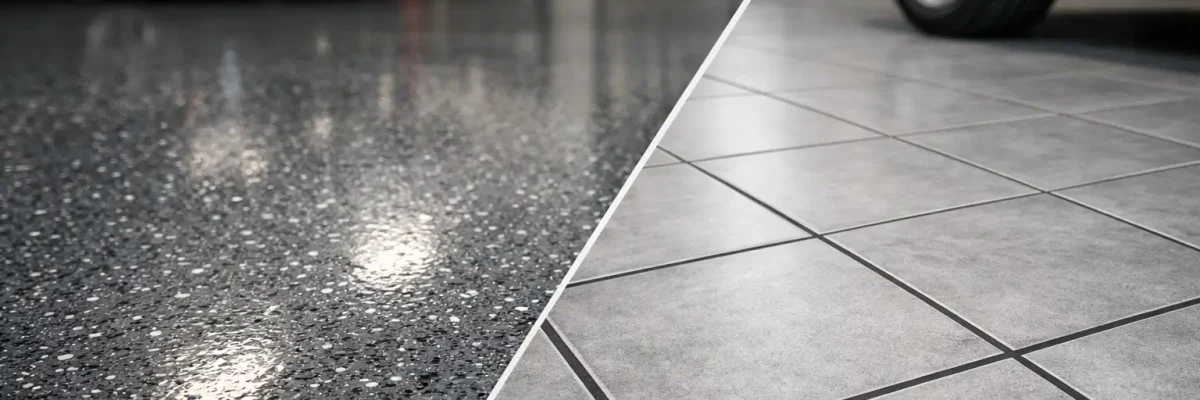
A garage floor usually starts getting judged the moment the boxes come down and the cars pull out. If you are weighing epoxy flooring vs tile garage options, the right answer depends on how you use the space, how much maintenance you want, and how well the floor needs to handle Phoenix heat, dust, and daily wear.
For some homeowners, a garage is mostly for parking and storage. For others, it doubles as a gym, workshop, hobby area, or a clean extension of the home. Those details matter because the best-looking floor is not always the one that performs best over time.
Epoxy flooring vs tile garage: the real difference
At a glance, both options can dramatically improve a plain concrete slab. Both can make a garage look cleaner, brighter, and more finished. But they get there in very different ways.
Epoxy flooring is a coating system applied directly over properly prepared concrete. When installed correctly, it creates a continuous surface with strong adhesion, a clean appearance, and good resistance to stains, chemicals, and tire traffic. It feels integrated with the slab because it is.
Garage tile is a modular flooring system made of individual tiles that are laid over the concrete. Depending on the product, tiles may snap together or be adhered in place. They come in a wide range of colors and patterns, and they can create a custom look quickly. The trade-off is that they introduce seams, edges, and movement that a coated floor does not have.
For many homeowners, this decision comes down to one question: do you want a hard-wearing, low-maintenance surface bonded to the concrete, or a modular floor with more design flexibility but more variables over time?
Durability in a working garage
Durability is usually where epoxy starts to pull ahead, especially in a garage used for vehicles, tools, equipment, or regular foot traffic. A professionally installed epoxy or polyaspartic system is designed to stand up to hot tire pickup, abrasion, impact, and spills. It also does not have grout joints or separate pieces that can shift.
Tile performs differently. Some garage tiles hold up well under normal use, but they are still individual pieces under constant load. Heavy point loads, jacks, rolling tool chests, dropped tools, and turning tires can create stress at seams or corners. If one tile gets damaged, it can often be replaced, which is a point in tile’s favor. But the system as a whole is still only as stable as its installation and the concrete beneath it.
In Arizona, heat matters too. Garages can get extremely hot, and floor materials need to handle temperature swings without failing. High-quality epoxy systems installed with the right prep are built with those conditions in mind. Some tile systems can expand or shift more noticeably, especially if the slab is imperfect or moisture conditions are not addressed first.
Appearance and design flexibility
This is where tile has a genuine advantage for some buyers. If you want a checkerboard pattern, bold color contrast, or a showpiece garage with a more customized visual layout, tile opens up more decorative options. It can create a showroom feel that appeals to car enthusiasts and homeowners who want something visually distinct.
Epoxy offers a different type of finished look. It is sleek, uniform, and professional. Solid colors, decorative flakes, and satin or gloss finishes can make the garage look polished without feeling busy. For most homeowners, that clean, continuous appearance feels more timeless and easier to match with the rest of the property.
If your goal is broad resale appeal, epoxy tends to be the safer choice. It looks finished, clean, and intentional without locking the space into a very specific style.
Maintenance and cleaning
This category matters more than many people expect. A garage floor can look great on installation day and become frustrating six months later if it traps dirt or takes extra effort to clean.
Epoxy is easier to maintain because the surface is continuous. Dust, leaves, and debris can be swept or blown out quickly. Oil drips, light chemical spills, and tracked-in dirt are generally easier to wipe up when the floor is properly sealed and intact.
Tile can be more complicated. Dirt and dust collect in seams. Water can work its way underneath certain tile systems. If you wash the floor down, moisture may not dry as evenly or as quickly as it does on a coated slab. In a clean, low-traffic garage, this may not be a dealbreaker. In a busy household garage, it often becomes noticeable fast.
For Phoenix-area homes dealing with fine desert dust, fewer seams usually means less ongoing cleanup.
Cost now vs value over time
Comparing price can get tricky because not all epoxy systems are equal, and not all tile products are equal. A basic DIY coating is not the same as a professionally installed garage floor system with proper grinding, crack repair, moisture checks, and commercial-grade products. Likewise, low-cost plastic tiles are not in the same category as higher-end garage tile systems.
Tile can sometimes look attractive on upfront cost, especially if someone is comparing material prices only. But the installed price, long-term upkeep, and performance under real garage use should all be part of the equation.
A professionally installed epoxy floor often delivers better value over time because it is built around substrate preparation and adhesion. That prep work is what helps the floor last. If a floor looks good but fails early because the concrete was not properly prepared, it was never the cheaper option.
For most homeowners focused on lasting results rather than a short-term cosmetic upgrade, epoxy usually delivers a stronger return.
Installation matters more than the product label
A big reason garage floors fail has less to do with the material and more to do with the installation. This is especially true with epoxy.
Concrete has to be evaluated, cleaned, repaired, and mechanically prepared before any coating goes down. Moisture issues need to be identified. Cracks and spalls should be addressed correctly. The product needs to be matched to the space, the use, and the conditions inside the garage.
With tile, installation may seem simpler, but the slab still matters. Uneven concrete, existing damage, moisture vapor, and poor edge transitions can all create problems later. A floor system is only as reliable as the surface below it.
That is why many homeowners choose to work with an experienced local contractor rather than treat the garage like a quick weekend project. In a climate like ours, details matter.
When tile makes sense
There are cases where tile is a reasonable choice. If you want a very specific visual design, need the option to replace individual sections, or are creating more of a display space than a hard-use garage, tile can fit the goal.
It can also appeal to homeowners who want a less permanent-feeling finish or who enjoy the look of a segmented floor. If the garage sees lighter use and appearance is the top priority, tile may check the right boxes.
The key is being honest about how the garage will actually function. A garage that stores two vehicles, bikes, tools, coolers, holiday bins, and lawn equipment is not the same as a garage used mainly for weekend car detailing.
When epoxy is the better fit
For the average homeowner, epoxy is the more practical choice. It is especially well suited for garages that need to handle vehicles, frequent traffic, storage, occasional spills, and regular cleaning without becoming high maintenance.
It also makes sense if you want the floor to feel like a true upgrade to the home rather than a separate add-on layer. A professionally installed coating gives the garage a cleaner, brighter, more finished look while supporting real daily use.
At Right Choice Painting, we see many Phoenix-area homeowners choose epoxy because they want a floor that looks sharp, holds up, and stays easy to maintain. That combination is hard for tile to beat in a working garage.
So which one should you choose?
If you are deciding between epoxy flooring vs tile garage finishes, start with performance, not just appearance. Think about heat, dust, vehicle use, cleaning habits, and how long you want the floor to last without becoming another thing to manage.
Tile has style flexibility and can work well in the right setting. Epoxy offers a cleaner surface, stronger day-to-day durability, and easier maintenance for most households. For a garage that needs to look polished and perform year after year, epoxy is usually the stronger overall investment.
The best garage floor is the one that still looks good after real life happens on it. Choose the option that fits how you live, not just how you want the garage to look on day one.