
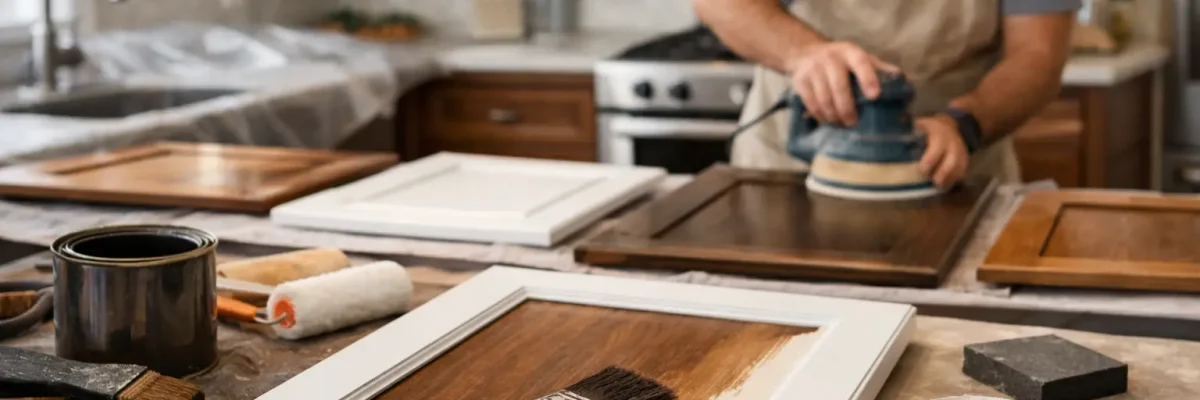
If your cabinets look dated, worn, or just no longer fit the style of your home, the first question is usually practical: what does cabinet refinishing include, and is it enough to make the space feel new again? In many Phoenix-area homes, the answer is yes – as long as the work goes beyond a quick coat of paint and follows a proven process built for durability.
Cabinet refinishing is not the same as replacing cabinets, and it is not the same as a rushed repaint. A professional refinishing project focuses on restoring and updating the cabinets you already have by preparing the surfaces correctly, addressing wear, and applying finishes that are designed to hold up in a hard-working room like a kitchen, bathroom, or laundry area. The goal is a clean, updated look with a finish that lasts.
What Does Cabinet Refinishing Include in a Professional Project?
At its core, cabinet refinishing includes inspection, prep, surface repairs, sanding or deglossing, priming when needed, finish application, and reassembly. That sounds simple on paper, but the quality of each step is what separates a smooth, factory-like result from cabinets that chip, peel, or show brush marks after a few months.
A professional crew starts by evaluating the cabinet material and current condition. Solid wood, MDF, laminate, and previously painted surfaces all require different handling. If a cabinet has grease buildup, water damage near the sink, swollen panels, or failing coatings, that has to be identified early. Refinishing works well for many cabinets, but not every set is a good candidate. When the structure is failing, replacement may be the smarter investment.
Once the cabinets are confirmed to be good refinishing candidates, the project moves into careful prep. This is where a lot of the real value is.
The Prep Work Most Homeowners Don’t See
Cabinets collect more than dust. In kitchens especially, they hold onto cooking oils, hand residue, food splatter, and cleaning product buildup. Before any sanding or coating begins, surfaces need to be thoroughly cleaned so the new finish can bond properly.
Doors, drawer fronts, and hardware are usually removed and labeled. That may seem like a small detail, but it helps everything go back in the right place and keeps the finished kitchen looking aligned and consistent. Masking and protection are also part of the process. Floors, countertops, appliances, and adjacent walls should be covered to keep the work area clean and controlled.
After cleaning comes sanding or deglossing. The exact method depends on the cabinet surface and the finish being applied. This step is not about aggressively stripping every cabinet to bare wood unless the project specifically calls for it. More often, it is about creating the right profile for adhesion, smoothing out wear, and removing weak or failing material. If corners are chipped or old finish is flaking, those spots need extra attention.
Minor repairs are also often included in cabinet refinishing. That can mean filling small dents, addressing nail holes, smoothing minor imperfections, or correcting light surface damage. If hinges are loose or hardware holes need adjustment, those issues may be handled as part of the prep or reassembly stage. Larger structural problems are a different story and may require carpentry work beyond standard refinishing.
Priming, Painting, or Staining
What happens next depends on the look you want and the material you have.
Painted cabinet refinishing typically includes a bonding primer followed by a cabinet-grade paint or coating system. Primer matters because cabinets are touched constantly and exposed to heat, moisture, and everyday wear. Without the right foundation, even a nice-looking topcoat can fail early.
If you want a stained wood look instead of paint, the process may include stripping or sanding down the previous finish more extensively, then applying stain and a protective clear coat. This route can be a good fit when the wood grain is attractive and worth showcasing. It usually requires more surface consistency, though, because stain tends to highlight differences in the substrate rather than hide them.
For previously painted cabinets, refinishing may involve leveling out old brush strokes, drips, or uneven texture before the new finish goes on. For laminate or thermofoil-style cabinets, the conversation changes a bit. Some surfaces can be refinished successfully with the right prep and products, while others have limitations. This is one of those areas where honest evaluation matters. A dependable contractor should explain what is realistic before work begins.
What Does Cabinet Refinishing Include for the Final Finish?
The finish stage is where appearance and durability come together. Professional cabinet refinishing usually includes multiple coats applied in a controlled, even manner. Depending on the coating system, that may involve primer plus two finish coats, or a specialty system designed for cabinetry.
Application method matters. Cabinets need a smooth, consistent finish that can stand up to repeated use, so the products and technique should be chosen with that in mind. Dry time and cure time matter too. A cabinet may feel dry to the touch relatively quickly, but that does not mean it is fully cured and ready for heavy use. Rushing this part can leave marks, sticking doors, or premature damage.
Color selection is part of the refinishing process as well. White and off-white cabinets remain popular, but many homeowners are choosing warm neutrals, soft grays, deep blues, charcoal tones, and natural wood refinishes. In Arizona homes, color choices often balance brightness with practicality. A beautiful finish still has to work with the lighting, flooring, counters, and overall style of the space.
Reassembly, Detailing, and Inspection
Once the finish has dried enough for handling, doors and drawers are reinstalled, hardware is put back on, and alignment is checked. Good refinishing work should not stop at paint coverage. Doors should hang properly, drawer fronts should look even, and the overall room should feel polished.
Detail work is a major part of the final result. That includes touch-ups, inspecting edges and corners, checking for consistency in sheen, and cleaning the work area. The difference between acceptable and excellent often shows up here. A quality-focused company treats the final walkthrough as part of the job, not an afterthought.
For homeowners and property managers, this stage also provides a chance to review care instructions. Freshly refinished cabinets should be cleaned with appropriate products and treated carefully during the full curing period. That small bit of guidance can help protect the finish long after the crew leaves.
What Cabinet Refinishing Usually Does Not Include
It helps to know the limits of the service too. Cabinet refinishing usually does not mean changing the cabinet layout, replacing boxes, adding new custom doors, or correcting major structural damage. It also may not include interior cabinet painting unless that is specifically part of the scope.
Some clients also assume refinishing automatically includes new hardware, soft-close hinge upgrades, or major carpentry modifications. Those can often be added, but they are not always part of a standard refinishing proposal. This is why a clear estimate matters. The best projects start with a shared understanding of exactly what will be done.
Is Cabinet Refinishing Worth It?
For many property owners, yes. If the cabinet boxes are solid and the layout still works, refinishing can deliver a major visual upgrade without the cost and disruption of a full replacement. It is often one of the most efficient ways to improve a kitchen or bathroom.
That said, it depends on the condition of the cabinets and your long-term goals. If your cabinets are heavily damaged, poorly built, or no longer functional for the space, refinishing may only delay a larger remodel. But if the bones are good, professional refinishing can dramatically improve appearance, extend service life, and raise the overall finish level of the room.
In homes across Phoenix, Scottsdale, Peoria, and surrounding communities, cabinet refinishing is often chosen because it strikes the right balance – fresh look, less downtime, and a more manageable investment than full replacement. When the prep is thorough and the coatings are chosen carefully, the results can feel like a complete transformation.
That is really the answer to what cabinet refinishing includes. It includes much more than paint. It is a step-by-step process built around cleaning, repair, preparation, product selection, careful application, and final quality control. When done right, it gives your existing cabinets a second life and gives the room a cleaner, more finished look without turning your home or property into a full construction zone.
If you are considering cabinet refinishing, the best next step is to look past the color sample and ask about the process. The finish you live with every day depends on the work that happens before the first coat ever goes on.