
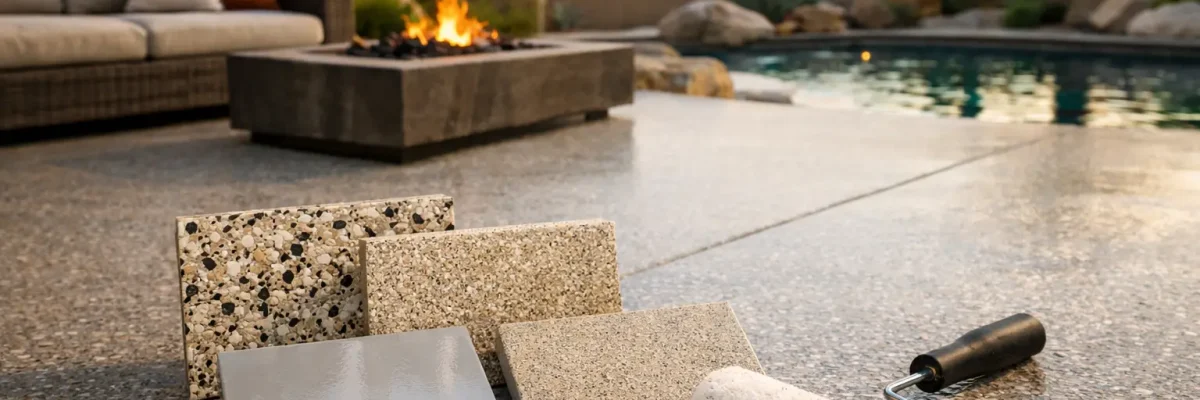
A Phoenix patio has a tougher job than most outdoor surfaces. It handles intense UV exposure, summer heat, monsoon moisture, tracked-in dust, patio furniture, grills, and frequent foot traffic. Choosing the best coatings for concrete patios is less about picking the brightest color chip and more about matching the finish to the slab, the way you use the space, and the conditions it faces every day.
The right coating can make a worn patio look intentional and finished while helping protect the concrete beneath it. The wrong one can peel, fade unevenly, become slippery when wet, or trap moisture in a slab that was never properly prepared. That is why professional surface evaluation and prep matter as much as the coating itself.
What a Patio Coating Needs to Handle in Phoenix
Concrete may look solid, but it is porous and constantly moves slightly with temperature changes. In the Phoenix area, direct sunlight can push patio surface temperatures far above the air temperature. Add the occasional heavy rain, irrigation overspray, pool traffic, or a shaded area that dries slowly, and the coating needs to perform under very different conditions.
A good patio finish should offer UV stability, adhesion, cleanability, and a texture that makes sense for an exterior walking surface. It should also work with the condition of the existing concrete. A newer, sound slab has more options than a patio with old paint, cracks, moisture issues, or years of staining from planters and barbecue grease.
Color matters, too. Dark finishes can look dramatic, but they absorb more heat. Lighter neutrals often stay more comfortable underfoot and tend to suit the bright, desert-style exterior palettes found across Scottsdale, Peoria, Glendale, Cave Creek, Anthem, and the rest of Maricopa County.
The Best Coatings for Concrete Patios, Compared
There is no one coating that is best for every patio. The most practical choice depends on whether your priority is a natural look, decorative color, maximum durability, budget, or a cooler and safer surface around a pool or outdoor living area.
Concrete stain and sealer for a natural finish
Concrete staining is a strong choice when the slab is in decent condition and you want the character of concrete to remain visible. Rather than creating a thick film on top of the slab, a penetrating or reactive stain colors the surface while allowing natural variation to show through. A compatible exterior sealer is then applied to help protect the finish from weather and everyday use.
Stained concrete works especially well for homeowners who prefer earth tones, soft grays, warm browns, or a more organic finish than a solid painted surface. It can complement Southwest architecture without making the patio look overly uniform.
The trade-off is that stain does not hide every flaw. Existing patches, major discoloration, and repair areas may still show. Results can also vary from one slab to another, which is part of the appeal for some clients but not for those seeking a perfectly consistent color. Proper cleaning, surface testing, and realistic expectations are essential.
Acrylic concrete coatings for color and versatility
Exterior-grade acrylic coatings are often one of the most flexible options for concrete patios. They can provide a consistent color, refresh a faded surface, and offer a more budget-conscious alternative to thicker coating systems. When the right product is selected for exterior concrete and applied over carefully prepared concrete, acrylic finishes can perform well on many residential patios.
This is a practical option when a patio has cosmetic staining or uneven color that a stain would not disguise. It is also useful for homeowners who want a coordinated look between a patio, walkways, exterior walls, or pool deck areas.
Acrylic coatings are not a shortcut around prep work. Loose material, chalking, old failing paint, and contaminants must be removed. The surface may need repairs and profiling so the new coating can bond correctly. For wet areas, a slip-resistant additive or textured application should be part of the conversation rather than an afterthought.
Textured deck coatings for comfort and traction
For patios around pools, covered outdoor spaces, or areas that see frequent bare feet, textured deck coatings can be an excellent fit. These systems are designed to create a more slip-resistant walking surface and can help reduce glare compared with a glossy finish. Depending on the system and color, they may also feel more comfortable underfoot than dark, dense concrete in direct sun.
Texture needs to be selected carefully. Too little texture may not provide enough traction when water is present. Too much can be uncomfortable to walk on, difficult to clean, or rough on bare feet. A professional can recommend a finish level that fits how the space is used, whether that means a quiet courtyard, a busy family pool deck, or a commercial outdoor seating area.
Textured coatings can also help make minor surface inconsistencies less noticeable. They will not solve structural cracks or serious slab movement, but they can create a more finished, cohesive appearance after appropriate repairs are completed.
Epoxy systems for protected patio spaces
Epoxy is well known for garage floors, and it can be a durable decorative solution in the right patio setting. It offers a hard, attractive finish and can be installed with decorative flakes, metallic effects, or solid colors. However, standard epoxy is not always the best stand-alone choice for a patio in full Arizona sun.
Many epoxies can amber, chalk, or lose their appearance under prolonged UV exposure unless they are protected with a UV-stable topcoat. For covered patios, enclosed outdoor rooms, or spaces with limited direct sunlight, an epoxy system may be appropriate. For fully exposed patios, a system with a high-quality exterior topcoat is generally the safer path.
Epoxy also requires dry, properly prepared concrete. Moisture vapor coming through the slab can compromise adhesion. This is one reason a visual inspection alone is not enough before selecting a coating system.
Polyaspartic and urethane topcoats for added durability
Polyaspartic and urethane coatings are commonly used as protective topcoats because they offer excellent wear resistance and better UV stability than many standard epoxies. In certain systems, they can provide a durable finish for patio areas, particularly when paired with a compatible base coat and decorative broadcast material.
These higher-performance systems are not automatically the right answer for every outdoor surface. They can cost more, and the product specifications must match the slab, exposure level, and desired texture. Application timing also matters in Arizona heat, since some fast-curing materials require skilled installation to maintain an even finish.
Preparation Decides Whether a Coating Lasts
A patio coating is only as dependable as the concrete beneath it. The most common coating failures usually begin with poor adhesion, and poor adhesion often traces back to inadequate preparation.
Before any finish is applied, the concrete should be evaluated for peeling coatings, oil or grease contamination, efflorescence, cracks, spalling, moisture concerns, and weak or powdery surface material. Cleaning may involve pressure washing, degreasing, mechanical grinding, or other methods appropriate for the slab and chosen system. Cracks and damaged areas should be repaired with materials designed for concrete movement and exterior exposure.
The patio must also be clean and dry enough for the product being installed. Applying a coating over trapped moisture or dusty concrete may look acceptable at first, then fail when heat and weather put it to the test. Thorough prep is not the glamorous part of the project, but it is where long-term performance begins.
Choosing Color, Sheen, and Texture
A patio should support the way you live outdoors. Light tan, sand, gray, and muted taupe finishes are popular because they work with many Arizona homes and do not show dust as quickly as very dark colors. Multi-tone finishes can also be forgiving around landscaping and outdoor furniture.
For sheen, glossy finishes can make colors appear richer but may show footprints, water spots, and surface imperfections more readily. Satin or low-sheen finishes are often a better balance for exterior patios. They look polished without turning the surface into a mirror in bright sunlight.
If the patio is near a pool, a grill, or an entry door, traction should be part of the final specification. A coating can be beautiful and still be the wrong choice if it becomes slick after a monsoon shower or when swimmers cross the surface.
When to Call a Professional
A DIY coating project can be tempting, especially when a patio only looks faded. But exposed concrete is unforgiving, and Arizona weather leaves little room for weak prep or the wrong product. Professional installation is especially worthwhile when the patio has previous coatings, visible cracks, drainage concerns, moisture issues, or an area that needs a coordinated pool deck finish.
An experienced contractor can identify what is already on the concrete, recommend a compatible system, prepare the surface correctly, and build in the right level of traction. At Right Choice Painting, LLC, the focus is on helping Phoenix-area property owners select finishes that look sharp, hold up to real use, and fit the character of their home or business.
A patio should invite people outside, not become another maintenance concern. Start with the condition of the concrete, be honest about sun and water exposure, and choose a coating system that is designed for the life your outdoor space actually lives.