
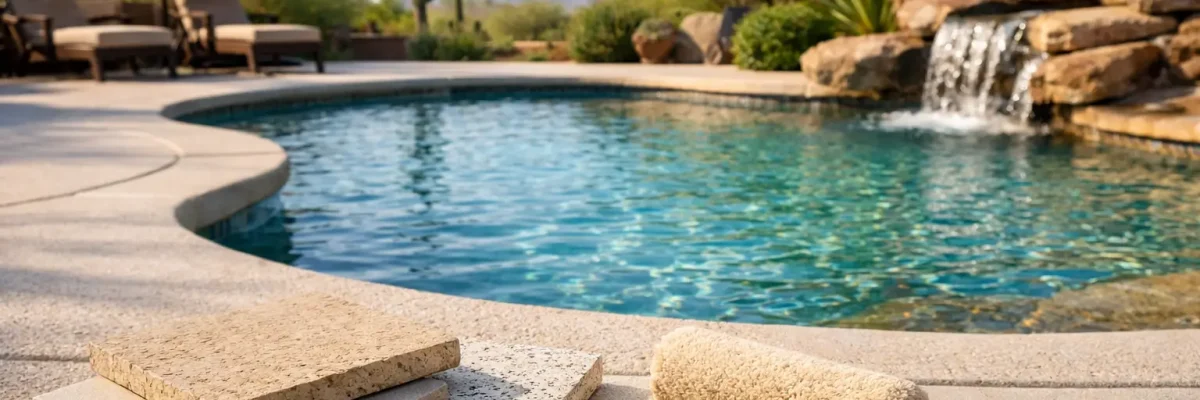
A Phoenix pool deck has a tougher job than most outdoor surfaces. It needs to handle intense sun, summer monsoons, wet feet, pool chemicals, furniture movement, and bare feet crossing the patio at the hottest part of the day. The best pool deck coating materials are not simply the ones that look good on a sample board. They are the materials that fit your concrete’s condition, your exposure to heat, and the way your family or guests use the space.
For homeowners, property managers, and hospitality properties, the right coating can make an aging deck safer, cooler, easier to clean, and much more polished. The wrong product can peel, fade prematurely, become slippery when wet, or trap problems below the surface. That is why product selection should begin with the concrete itself, not just the color you want.
What a Pool Deck Coating Must Handle in Phoenix
Phoenix-area concrete expands and contracts under wide temperature swings. UV exposure is relentless, especially on south- and west-facing deck areas, while splash zones are exposed to chlorine, saltwater systems, sunscreen, and regular moisture. A quality coating needs strong adhesion, UV stability, water resistance, and a finish that supports safe footing.
Surface temperature matters just as much. Dark colors and dense, nonreflective finishes tend to absorb more heat. A coating can improve comfort, particularly when paired with a light color and texture, but no surface finish makes concrete completely cool in direct Arizona summer sun. A dependable contractor should set that expectation clearly before work begins.
Preparation is equally important. Concrete must be cleaned, mechanically profiled when needed, repaired, and allowed to dry properly. Coating over loose paint, dust, efflorescence, or unresolved moisture issues is a short-term fix at best.
Best Pool Deck Coating Materials for Common Needs
Acrylic pool deck coatings
Acrylic coatings are one of the most practical choices for many residential pool decks. They are available in a broad range of colors, can be applied with a textured finish, and generally hold up well against UV exposure when a quality exterior-grade system is used. They are also more breathable than many resinous coatings, which can be helpful on exterior concrete slabs.
For a deck that is structurally sound but faded, stained, or cosmetically worn, an acrylic coating can provide a clean, refreshed appearance without the cost and thickness of a full resurfacing system. It is especially useful when a homeowner wants a lighter color and subtle texture to improve visual appeal and footing.
The trade-off is that acrylic coatings may need maintenance or recoating sooner than higher-build systems, particularly in high-traffic areas. They are a smart choice when the concrete is in fair condition and routine upkeep is acceptable.
Cool deck and textured acrylic systems
Cool deck is often used as a general term for textured, heat-conscious pool deck finishes. These systems commonly use acrylic-based materials applied in a textured pattern over concrete. The texture creates small variations at the surface that can improve slip resistance and help the deck feel more comfortable underfoot than bare, dark concrete.
This is a popular option for Phoenix homes because it combines function with a classic poolside look. It can help cover minor cosmetic flaws, provide a more intentional finish around the water, and create a surface that is friendlier for everyday pool traffic. Light tan, soft gray, sand, and off-white tones are frequently chosen because they complement desert architecture while reflecting more sunlight than darker colors.
Cool deck systems are not a cure for major cracking, slab movement, or failing concrete. Existing cracks need to be evaluated and repaired appropriately, and areas with recurring movement may still show signs of stress over time. Texture must also be selected carefully. Too little texture can reduce traction, while an overly aggressive profile can be uncomfortable on bare feet and harder to keep clean.
Cementitious overlays
A cementitious overlay is a resurfacing material made with cement-based components and polymer additives. It is applied over prepared concrete to create a new, more uniform surface. Depending on the system, it can be smooth, broom-finished, textured, stamped, or customized with decorative patterns.
This is often the right path when a pool deck has widespread surface imperfections, shallow spalling, old patchwork, or uneven appearance that a thin coating alone will not hide. An overlay can restore the visual consistency of the deck before a protective color or sealer is applied.
The key consideration is substrate stability. Overlays depend on the existing slab being sound and properly prepared. If the concrete has active movement, severe deterioration, drainage problems, or moisture pressure, those concerns need attention before resurfacing. A professional assessment can prevent spending money on a finish that will not have the foundation it needs.
Polyurethane and polyaspartic coatings
Polyurethane and polyaspartic systems are high-performance resinous coatings known for durability, chemical resistance, and fast cure times. When specified for exterior use with UV-stable topcoats, they can be a strong option for certain pool-adjacent patios, outdoor entertaining areas, and commercial settings that need a clean, durable finish.
These systems are often considered where stain resistance and faster return to service are priorities. They can also be broadcast with traction media to create a more slip-resistant surface. For a hotel or property manager working around occupancy schedules, a faster-curing system may be especially valuable.
However, they are not automatically the best answer for every exposed pool deck. Resinous coatings require careful moisture testing and surface preparation, and some systems can feel hotter or become slicker than a textured acrylic finish if they are not designed and installed specifically for poolside use. Product chemistry, topcoat selection, color, and texture all matter.
Epoxy coatings
Epoxy is widely known for garage floors, and it offers excellent adhesion and chemical resistance in the right environment. But for an uncovered Phoenix pool deck, epoxy is usually not the first recommendation as a standalone finish. Standard epoxy can amber, chalk, or lose its appearance under sustained UV exposure.
An epoxy base may have a place within a multilayer system when it is protected by an exterior-rated urethane or polyaspartic topcoat. Still, that approach should be chosen for a specific performance reason, not because epoxy is familiar. For many open pool decks, a UV-stable acrylic or textured resurfacing system is the more natural fit.
How to Match the Material to Your Deck
Start by looking at the concrete’s current condition. A sound deck with fading and minor staining may only need a textured acrylic coating. A deck with cosmetic pitting, old repairs, and widespread roughness may benefit from a cementitious overlay first. If the area is heavily used for entertaining, commercial traffic, or frequent furniture movement, a higher-performance coating system may be worth considering.
Next, consider comfort and safety. A pool deck should have enough texture to support traction when wet, but it should still be comfortable for children, guests, and pets. Light colors generally make sense in the Phoenix climate, while proper slope and drainage remain essential. A coating can add protection and appearance, but it cannot correct standing water caused by an improperly pitched slab.
Finally, think about maintenance. Every exterior finish benefits from regular sweeping, prompt cleanup of sunscreen or chemical spills, and occasional gentle washing. Avoid harsh cleaners and pressure-washing practices that can damage a coating or force water into weak areas. A quality installation includes clear care guidance so the finish has the best opportunity to perform as intended.
Why Professional Preparation Makes the Difference
The most expensive coating material will not compensate for rushed prep. Professional pool deck work begins with inspection, cleaning, removal of failed coatings, crack and spall repair, and the appropriate surface profile for the selected system. Moisture conditions, concrete age, prior sealers, and weather forecasts should all be considered before application.
At Right Choice Painting, the goal is to recommend a pool deck solution that fits the concrete, the property, and the expected use of the area – then complete the work with careful prep, clean jobsite practices, and a final walkthrough. That approach helps homeowners avoid choosing a product based on appearance alone.
A pool deck should invite people outside, not make them worry about hot feet, slick spots, peeling paint, or an unfinished-looking patio. Choose a coating system that respects the Arizona climate, and give the installation the time and preparation it deserves.