
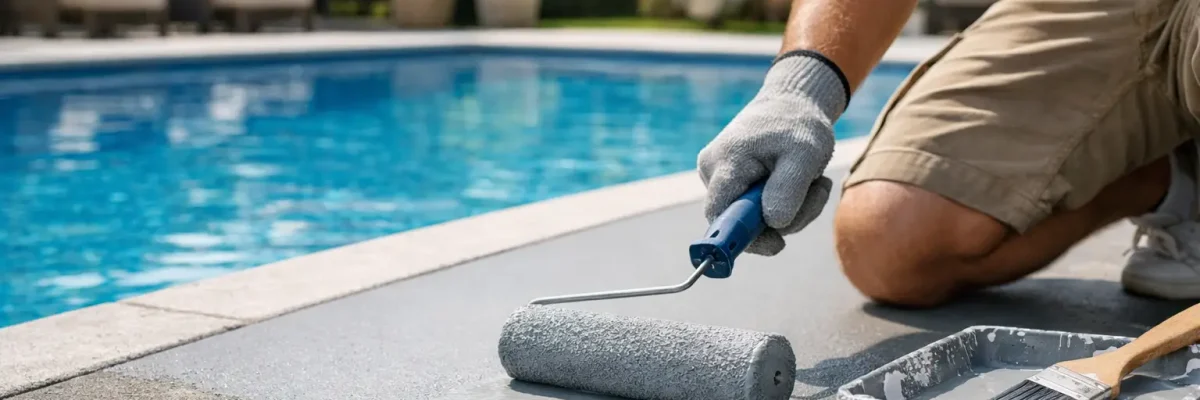
A pool deck can make an otherwise well-kept backyard look tired fast. In Phoenix, harsh UV exposure, hot concrete, chlorinated water, hard-water deposits, and everyday foot traffic can leave coatings faded, chalky, peeling, or slick. Learning how to repaint a pool deck starts with one rule: the new finish is only as durable as the preparation beneath it.
A fresh coating can improve color, comfort, traction, and the overall appearance of the pool area. But this is not a project to rush over a weekend without checking the concrete’s condition. The right products and process depend on whether the deck is bare concrete, previously painted, coated with acrylic, or showing signs of moisture or coating failure.
Start by Evaluating the Existing Pool Deck
Before buying paint, inspect the full deck in bright daylight. Look for peeling edges, bubbling, chalky residue, stains, cracks, flaking, and areas where the old coating has worn through. Pay close attention to the sections nearest the waterline, patio furniture, grill area, gates, and walkways. These high-traffic zones often need more repair and preparation than the rest of the deck.
Not every faded deck needs a full strip and repaint. If the existing coating is sound, firmly bonded, and only worn at the surface, a thorough cleaning and compatible recoat may be enough. If it is peeling in multiple areas, feels soft, or releases easily when scraped, applying a new coating over it will only create another failure layer.
Concrete moisture also matters in the Phoenix area. Pool decks can hold moisture beneath the surface after monsoon rain, irrigation overspray, plumbing leaks, or frequent pool use. Coating concrete that is damp or vapor-prone can lead to blisters and peeling, even when the finish initially looks excellent.
Choose a Coating Made for Pool Deck Conditions
A pool deck coating needs to do more than add color. It must hold up to sun, water, bare feet, cleaning chemicals, and changing temperatures while providing reasonable slip resistance. Standard exterior house paint is not designed for this kind of exposure and should not be used on a concrete pool deck.
Acrylic concrete coatings are a common choice because they are breathable, available in many colors, and generally more comfortable underfoot than dense industrial coatings. They can be a strong option for decks that need a refreshed appearance and practical traction without a glossy, plastic-like feel.
Epoxy systems offer excellent durability but are not always the right fit for an exposed pool deck. Some epoxy products can yellow under intense UV exposure, become hot in direct sun, or feel slick when wet unless a texture additive is included. They are often better suited to covered areas, garages, or specific applications where the manufacturer confirms exterior performance.
For many homeowners, a premium pool deck coating with a compatible non-slip additive delivers the right balance of appearance, durability, and foot safety. Product compatibility is critical. If an older coating remains in place, confirm that the primer and topcoat are designed to bond to it. When there is any doubt, perform a small test area or consult a painting professional before coating the entire deck.
How to Repaint a Pool Deck Step by Step
The actual painting portion is straightforward once the surface is clean, repaired, dry, and properly profiled. The preparation work takes the most time, but it is what protects your investment.
Clear and protect the work area
Remove furniture, planters, umbrellas, rugs, grills, and pool toys from the deck. Cover landscaping, nearby walls, drain openings, and pool features as needed. If the pool is close to the work area, take extra care to prevent dust, debris, cleaning solution, and coating material from entering the water.
Plan the project around weather and pool use. The deck needs to remain clear during cleaning, repairs, coating, and curing. Avoid starting when rain is expected, when the surface is extremely hot, or when wind is likely to carry overspray or debris across fresh coating.
Clean the surface thoroughly
Sweep away loose dirt first, then pressure wash the deck to remove dust, chalk, algae, sunscreen residue, oils, and loose coating. A pressure washer can be highly effective, but excessive pressure or a narrow tip can scar concrete and lift otherwise stable coating. Use enough pressure to clean, not to damage the surface.
Stubborn grease, mineral buildup, or organic staining may require a concrete-safe cleaner or degreaser. Rinse thoroughly afterward. Residual cleaner can interfere with adhesion, so do not treat rinsing as an afterthought.
Allow the deck to dry fully. Drying time varies based on shade, humidity, concrete porosity, and recent weather. In Arizona, the top surface may look dry quickly while moisture remains below. Following the coating manufacturer’s moisture and temperature requirements is essential.
Remove failed coating and create a sound surface
Scrape and sand loose or peeling paint until you reach firmly bonded material. Feather the edges where old coating meets exposed concrete so those transitions do not show through the new finish. A floor grinder may be necessary when widespread coating failure, thick layers, or slick sealed concrete prevent proper adhesion.
Bare concrete often needs a light surface profile before coating. This can be created by mechanical grinding or an appropriate etching system, depending on the product and the deck’s condition. The goal is not to gouge the concrete. It is to create a clean, slightly textured surface that allows the coating to bond.
Repair cracks, chips, and damaged areas
Small surface cracks can often be repaired with a flexible concrete crack filler. Larger cracks, spalling, and chipped edges may require a concrete patch product designed for exterior use. Use a repair material compatible with the planned coating system, and allow it to cure as directed.
Do not expect paint to hide structural cracking or uneven concrete. If a crack continues to move, the repaired line may eventually show again. A professional can help determine whether the issue is cosmetic, drainage-related, or a sign that more extensive concrete repair is needed.
Prime only when the system calls for it
Some pool deck coatings are self-priming over properly prepared concrete, while others require a dedicated primer. Primer is especially valuable when coating bare patches, porous concrete, repaired areas, or a deck with mixed surfaces. It can improve uniformity and help prevent uneven absorption that causes a blotchy finish.
Use the primer specified by the coating manufacturer. Mixing products from different systems may save money upfront, but it can create adhesion issues and complicate any product warranty.
Apply thin, even coats
Cut in edges and tight areas with a brush, then use a roller suited to textured concrete for the main field. Work in manageable sections and maintain a wet edge to reduce lap marks. Two thin coats generally perform better than one heavy coat because they cure more evenly and are less likely to trap moisture or develop soft spots.
If the coating does not include texture, add an approved non-slip additive at the recommended rate. More texture is not always better. An overly aggressive finish can be uncomfortable on bare feet, collect dirt, and make the deck harder to clean. The best texture provides traction without feeling abrasive.
Respect recoat windows. Applying the second coat too soon can pull up the first layer, while waiting too long may require additional surface preparation for proper bonding.
Avoid the Most Common Pool Deck Painting Problems
Peeling is usually a preparation or moisture problem, not simply a bad-paint problem. Coating over chalky residue, dust, sunscreen, failed paint, or damp concrete almost guarantees a shorter service life. Skipping crack repairs can also allow water to work beneath the finish over time.
Another common issue is choosing a dark color without considering Arizona heat. Dark gray, black, deep brown, and other saturated shades can make a deck significantly hotter in direct sunlight. Lighter neutrals tend to be more comfortable under bare feet while still hiding everyday dust better than bright white.
Finally, do not judge cure time by touch alone. A coating may feel dry within hours but still need several days before it can handle furniture, pool traffic, and regular cleaning. Keep people, pets, and heavy items off the surface until the manufacturer’s full cure time has passed.
When Professional Pool Deck Coating Is the Better Choice
A do-it-yourself repaint can work well for a small deck with solid concrete and a compatible existing coating. The project becomes more complicated when there is widespread peeling, drainage trouble, substantial cracking, unknown coating history, or a need for a decorative texture system.
Professional preparation equipment can make a meaningful difference on larger decks, particularly when grinding, moisture evaluation, crack repair, and careful masking around the pool are required. Experienced crews also know how to plan application times around surface temperature, weather, and curing conditions, which is especially valuable during Phoenix summers.
Right Choice Painting helps homeowners and property managers select durable pool deck coating solutions that fit the condition of the concrete, the look of the property, and the demands of the Arizona climate. A detailed assessment before work begins helps prevent surprises and supports a finish built to last.
A properly repainted pool deck should feel like an upgrade every time you step outside: clean, comfortable, slip-resistant, and ready for the season ahead. If the surface needs more than a simple refresh, getting the preparation right is the best place to start.