
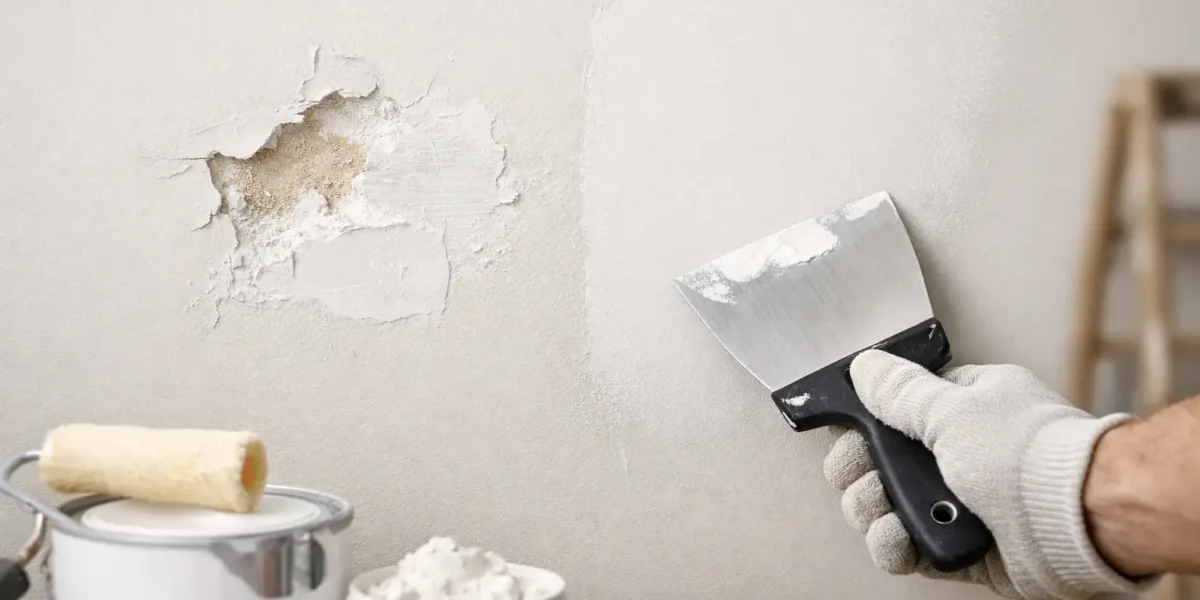
Fresh paint has a way of revealing everything. A small nail pop, a poorly patched dent, or a seam that looked fine in low light can suddenly stand out once the new color goes on. That is why drywall repair before painting is not an extra step – it is the step that determines whether the finished room looks truly professional or just newly painted.
In homes and commercial spaces across the Phoenix area, we see this issue often. Owners invest in color updates, cabinet work, or full interior repainting, but the walls underneath have years of wear. Scuffs, settlement cracks, popped fasteners, corner bead damage, and old patch jobs all affect the final result. Paint can improve a surface, but it does not hide poor surface condition. In many cases, it makes flaws more visible.
Why drywall repair before painting matters so much
Paint sits on the surface. It does not level out dents, bridge cracks in a lasting way, or disguise rough texture transitions. Flat paint may soften minor imperfections, but eggshell, satin, and semi-gloss finishes tend to reflect more light and show more defects. In rooms with strong natural light or overhead LED lighting, even subtle wall problems become easy to spot.
There is also a durability issue. If drywall damage is left untreated, the paint film above it can fail early. A crack may reopen through the new coating. A loose area around a nail pop can keep shifting. A patched section that was not sanded and primed correctly may flash, meaning it absorbs paint differently and stands out as a dull or shiny spot.
For homeowners, that usually means disappointment after spending money on a repaint. For property managers and business owners, it can mean callbacks, tenant complaints, or a space that still looks tired even after the work is complete. Proper prep protects the investment.
What should be repaired before painting drywall?
Not every mark in drywall needs the same treatment. Some surfaces need a quick fill and sand. Others need more careful correction so the repair does not return. The key is identifying whether the issue is cosmetic, structural, or moisture-related.
Small dents, dings, and nail holes
These are the most common and usually the simplest to fix. Small holes from picture hangers, minor furniture impact, and light surface bruising can often be filled with patching compound or lightweight spackle, then sanded smooth once dry. If done correctly, these repairs disappear under primer and paint.
The problem comes when they are rushed. Overfilled patches leave raised spots. Underfilled patches shrink and telegraph through the finish. On a large wall, inconsistent spot repairs can create a blotchy appearance if they are not sealed properly before painting.
Stress cracks and settling cracks
Hairline cracks above doors, near windows, or where walls and ceilings meet are common in Arizona properties. Some are harmless signs of normal movement. Others point to repeated stress in the framing or drywall joints. Simply painting over them rarely works for long.
A lasting repair usually involves opening the crack slightly, applying the right compound, and in many cases reinforcing the area with tape. That extra step matters. Without it, the crack often reappears through the new paint.
Nail pops and screw pops
When fasteners push forward, they create a small raised circle or a visible bump in the wall. This happens as framing shifts slightly over time. Covering the bump with paint does nothing. The area needs to be secured properly, patched, sanded, and inspected so the repair stays flat.
Water damage and stained drywall
This is where repair decisions need more caution. If drywall has swelled, softened, crumbled, or stained from a leak, the source of the moisture needs to be addressed first. Painting over damaged drywall may hide the issue briefly, but it does not solve it. In some cases, replacement is the right choice rather than patching.
Even after the damaged area is repaired, stain-blocking primer is often necessary to prevent discoloration from bleeding through the finish coat.
Texture inconsistencies and bad older patches
A wall can be technically repaired and still look wrong. This is common when older patch jobs were not feathered out properly or when texture does not match the surrounding area. On smooth walls, even a slight ridge becomes obvious. On textured walls, a patch that lacks the same pattern can stand out just as much.
This is one of the main reasons professional prep makes such a difference. The goal is not just to fill damage. The goal is to make the wall look consistent from one end to the other.
The right process for drywall repair before painting
Good results come from sequence, not shortcuts. If the order is wrong, even decent repair work can fail to blend in.
Start with a full surface check
Before any paint is chosen, the walls should be examined in direct and angled light. This helps reveal seam lines, dents, patch edges, and gloss differences from old repairs. In occupied homes and commercial spaces, this step also helps identify high-traffic damage that may otherwise be missed.
Make repairs with the right material
Different damage calls for different products. Lightweight fillers are useful for small cosmetic repairs. Joint compound is better for wider patching and feathering. Mesh or paper tape may be needed for cracks and seams. Using one product for every issue is convenient, but it does not always deliver the best finish.
Sand for a flat transition
This is where many repairs go wrong. A patch should not just feel smooth at the center. It has to blend smoothly into the surrounding wall. Sanding removes edges, levels filler, and prepares the area to accept primer evenly. Over-sanding can damage the paper face of the drywall, while under-sanding leaves visible halos.
Prime repaired areas
Fresh compound is porous. If it is painted without primer, it can absorb paint unevenly and create flashing. That patch may appear duller, lighter, or shinier than the rest of the wall even when the paint color matches. Primer creates a more uniform surface so the finish coat looks consistent.
Apply paint with surface uniformity in mind
Sometimes spot priming and repainting a single area is enough. Other times, especially on large walls with visible lighting, the full wall needs to be painted corner to corner for the repair to disappear. It depends on sheen, color, wall condition, and where the patch is located.
When a DIY repair works and when it usually does not
Some drywall fixes are reasonable for a skilled homeowner. A few nail holes in a guest room, for example, are often manageable with basic tools and patience. If the surface is smooth, the damage is minor, and you have time to let materials dry fully between steps, a small repair can turn out well.
Where DIY tends to break down is in larger visible areas, recurring cracks, ceiling repairs, texture matching, and any surface that will be painted in a higher sheen. These jobs are less forgiving. A repair may look fine before priming, then stand out once paint hits it. That is frustrating when the room is otherwise finished.
For occupied homes, there is also the dust factor. Drywall sanding creates fine particles that travel farther than most people expect. In commercial settings, rushed patching can also disrupt schedules and leave the space looking unfinished longer than planned.
Why professional prep pays off
A quality painting project is won before the finish coat goes on. Experienced painters know how to evaluate wall condition, choose the right repair method, and create a surface that holds paint evenly. They also know when patching is enough and when replacement or broader skim work is the smarter option.
That matters in Arizona, where strong sunlight exposes imperfections and where homes often show a mix of settlement movement, wear, and past repair attempts. A dependable contractor will not treat prep as an afterthought. They will build it into the scope, protect surrounding areas, keep the site clean, and inspect the repairs before moving into final paint application.
At Right Choice Painting, LLC, that prep-first mindset is part of delivering the polished result clients expect. Whether the project is a home interior update, a rental turnover, or a commercial repaint, the finished look depends on what happens before the paint ever opens.
Drywall repair before painting sets the standard
If you want crisp lines, even color, and walls that look truly refreshed, drywall repair before painting needs to be taken seriously. It is the difference between a room that looks newly coated and a room that looks professionally finished.
The good news is that most wall issues can be corrected with the right process. When the repair is handled carefully, primed properly, and followed by quality paint application, the final result feels clean, durable, and complete. That is what people notice when they walk into the space – not the patch, not the crack, just a smooth finish that looks the way it should.