
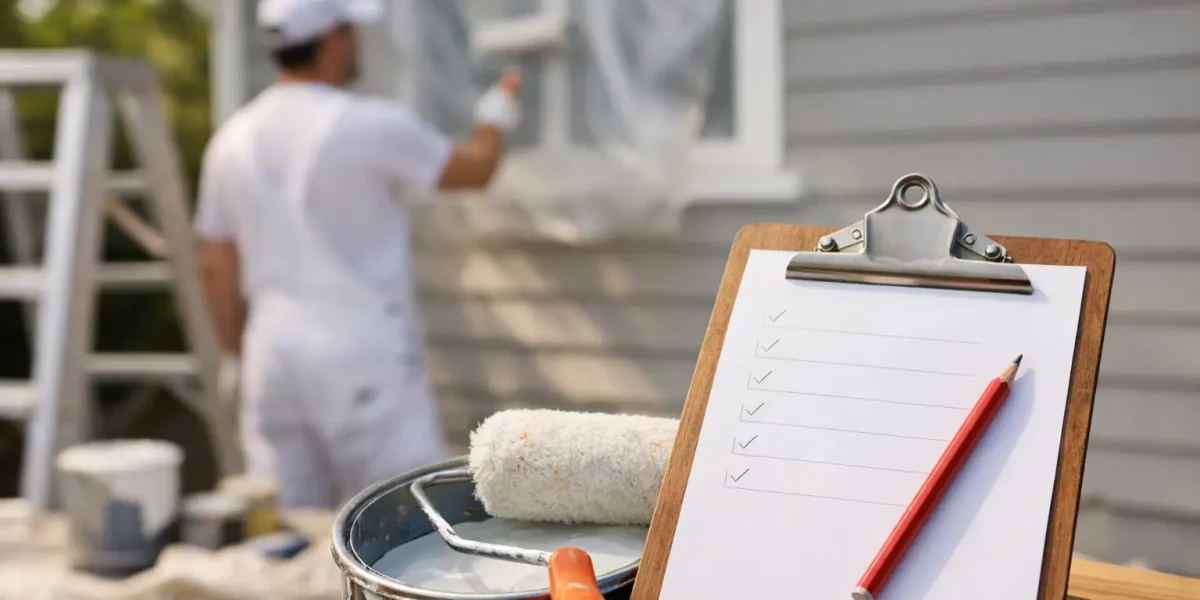
A paint job can look great on day one and still turn into a headache six months later if the prep, product choice, or timing is off. That is why a solid house painting checklist matters before a single brush or sprayer comes out. Whether you are updating one room, repainting your home exterior, or managing a commercial property, the best results usually come from good planning long before the first coat.
In the Phoenix area, that planning matters even more. Intense sun, heat, dust, and surface wear can expose shortcuts quickly. A well-organized project helps protect your investment, keeps the schedule realistic, and makes sure the finish holds up the way it should.
What a house painting checklist should cover
A useful house painting checklist is not just a shopping list for paint and rollers. It should help you think through the full project – surfaces, repairs, colors, access, prep, application, dry times, and final review. Homeowners often focus on color first, while contractors tend to look at condition first. Both matter, but surface condition usually decides whether the result lasts.
For interior work, the checklist should account for wall damage, sheen selection, furniture protection, trim details, and ventilation. For exterior work, it should include stucco or siding condition, caulking, pressure washing, sun exposure, and the right time of year to paint. Commercial projects add another layer, since scheduling around tenants, guests, employees, or customers can affect how the work is phased.
Start with the condition of the surface
Before choosing paint colors, walk the property and look closely at what is actually being painted. Faded color is one issue. Failing surfaces are another. Peeling paint, chalky stucco, drywall cracks, nail pops, water stains, wood rot, rust, and damaged caulking should all be identified early.
This is where many projects go off track. A wall or exterior elevation may look like it only needs paint, but once prep starts, underlying repairs become obvious. If you build those repairs into the checklist from the beginning, your estimate, timeline, and expectations will be more accurate.
It also helps to separate cosmetic touch-ups from structural concerns. Paint can improve appearance and add protection, but it is not a fix for leaks, rotted wood, or moisture intrusion. If those issues exist, they should be addressed before painting begins.
Confirm the scope before you buy anything
A common mistake is underestimating how much is included in the project. Are you painting walls only, or walls, ceilings, doors, baseboards, and trim? On the exterior, does the scope include fascia, pop-outs, shutters, garage doors, gates, or block walls? In a commercial setting, are common areas, entryways, or office suites part of the plan?
Clear scope keeps pricing and scheduling under control. It also prevents that mid-project moment where everyone realizes the doors were never discussed or the ceilings were assumed to be included. If you are working with a professional painting contractor, this is one of the most important parts of the estimate process.
Choose the right paint system, not just the right color
Color gets most of the attention, but the full paint system deserves just as much thought. That means primer, product type, sheen, and surface compatibility. Flat, eggshell, satin, semi-gloss, and gloss all behave differently, and the best choice depends on traffic, lighting, and how easy the surface needs to be to clean.
Exterior paint also needs to stand up to local conditions. In Arizona, UV exposure can be tough on color retention, especially on darker shades and surfaces with direct afternoon sun. Some finishes look sharp at first but show wear sooner in harsh conditions. Others may cost more upfront but last longer and maintain appearance better.
This is one area where professional guidance really pays off. The least expensive gallon is not always the best value if it leads to early fading, poor coverage, or shorter repaint cycles.
Prep work is where the quality really starts
House painting checklist for prep and protection
If you want a finish that looks clean and lasts, prep is not optional. Interior prep usually includes moving or covering furniture, protecting floors, patching minor wall damage, sanding rough areas, masking adjacent surfaces, and spot priming repairs. Exterior prep may involve washing, scraping, sanding, caulking, masking windows and fixtures, and repairing damaged areas before coating begins.
Good prep can feel slow, especially to someone eager to see fresh color on the wall. But this is where the sharp lines, smooth finish, and long-term durability come from. Skipping prep may save time on the front end, but it often shows up later as peeling edges, visible patches, uneven sheen, or premature wear.
Cleanup planning belongs here too. A professional project should include a clear plan for protecting landscaping, walkways, furniture, cabinets, flooring, and nearby surfaces. A neat jobsite says a lot about the contractor doing the work.
Check access, timing, and daily logistics
Even straightforward paint jobs can run into avoidable delays if access is not sorted out in advance. Make sure your checklist covers who will be onsite, how rooms or exterior areas will be accessed, where equipment and materials will be stored, and whether pets, vehicles, tenants, or operating hours need to be factored into the plan.
For interior projects, decide whether you will paint the entire home at once or phase the work room by room. For exterior jobs, think about weather windows, direct sun exposure, and whether certain elevations should be tackled earlier in the day. For businesses and hospitality properties, off-hours scheduling may be worth it to reduce disruption.
There is no one-size-fits-all answer here. The best schedule balances efficiency with practical use of the space.
Review samples in real lighting
Paint colors rarely look the same on a tiny swatch, a phone screen, and a full wall. Interior light changes by room, and exterior colors shift throughout the day depending on sun direction and shade. Before finalizing color, test samples where they will actually be used.
This step is especially important for large exterior repaints and cabinet projects. Undertones can become much more noticeable on broad surfaces. A color that seemed warm and clean in the showroom might look pink, green, or too bright once it is on your home.
A careful sample review can prevent expensive change orders and second-guessing after the work begins.
Know what the final walkthrough should include
The last part of a good house painting checklist is the final inspection. This is not just a quick glance from the curb or doorway. It should be a deliberate review of coverage, cut lines, sheen consistency, repaired areas, hardware reinstallation, touch-ups, and cleanup.
For interior painting, look at corners, baseboards, door casings, wall repairs, and transitions between rooms. For exterior painting, review trim lines, stucco coverage, doors, garage doors, and any areas with heavy sun exposure or texture changes. If specialty finishes, cabinet refinishing, concrete coatings, or commercial surfaces are involved, those should be checked with the same care.
A quality-focused contractor should welcome this step. At Right Choice Painting, LLC, thorough inspections are part of delivering the kind of finished result customers expect when they are investing in their property.
When it makes sense to bring in a professional
Some painting projects are manageable for a hands-on homeowner. Others are better left to an experienced crew. High ceilings, extensive prep, exterior stucco, wood repair, cabinet refinishing, epoxy coatings, and occupied commercial spaces all come with a higher margin for error.
The trade-off is usually time, finish quality, and durability. A do-it-yourself project may save on labor, but it can cost more if the wrong products are used or prep is rushed. Professional painters bring process, product knowledge, equipment, and efficiency that are hard to match on complex projects.
That matters even more when the goal is not just fresh color, but a durable, polished result that holds up under Arizona conditions and reflects well on your home or business.
A good checklist does more than keep a painting project organized. It helps you ask better questions, spot potential issues early, and make decisions that support a stronger final result. If you slow down enough to plan the work properly, the finished space usually looks better, lasts longer, and feels like money well spent.