
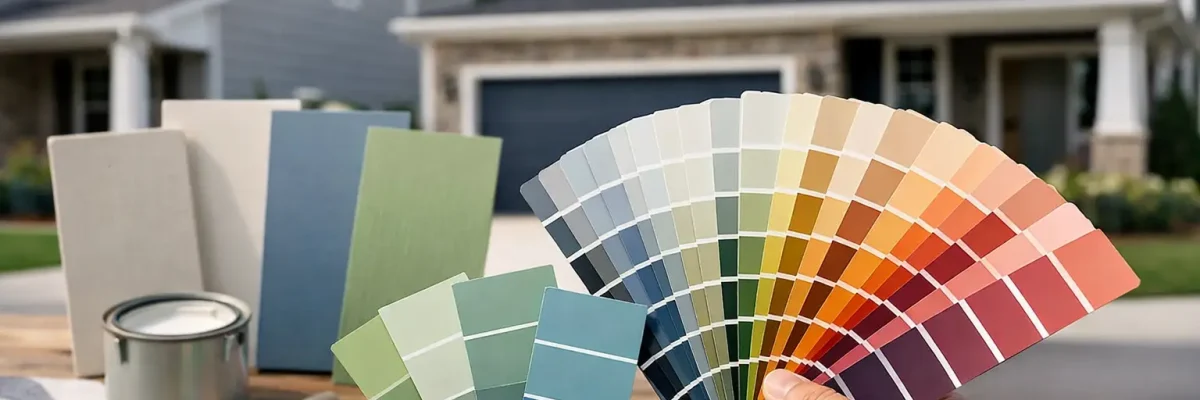
A color that looked perfect on a tiny paint chip can turn harsh, washed out, or oddly pink once it is covering stucco under full Arizona sun. That is why learning how to choose exterior paint colors is less about chasing trends and more about making smart decisions based on your home, your surroundings, and how the finish will actually perform.
For homeowners across Phoenix and Maricopa County, exterior color selection comes with a few added variables. Intense sunlight, HOA rules, desert landscaping, roof color, and the scale of the house all affect the final result. A good color scheme should improve curb appeal, hold up visually in bright light, and still feel right when you pull into the driveway every day.
How to choose exterior paint colors without guessing
The best place to start is with the parts of your home that are not changing. Your roof, stone, brick, pavers, and concrete are fixed visual elements, so your paint color needs to work with them rather than compete against them. If your roof has warm brown, tan, or reddish undertones, a cool gray body color can feel disconnected. If your stone has a lot of cream and sand tones, a bright white may look too stark next to it.
This is where many homeowners get stuck. They pick a paint color first because it is the most exciting decision, but the stronger approach is to let permanent materials lead. Paint is flexible. Tile and stone usually are not. When the body color, trim, and accents relate naturally to those surfaces, the whole property looks more intentional.
It also helps to think about scale. A color that looks rich and balanced on a sample card can appear much lighter once it is spread across large exterior walls. In Arizona, sun exposure can brighten colors even more. That is one reason soft greiges, warm taupes, muted sand tones, and grounded off-whites often perform well on exteriors here. They hold their character in strong light without feeling overly bright.
Start with undertones, not just the color name
Paint names are not very useful. “Desert Mist” or “Stone Path” might sound right, but the undertone is what determines whether the color actually fits your home. Most neutrals lean warm, cool, green, pink, or yellow once they are outdoors.
Warm undertones usually work well with desert landscapes, clay roof tiles, tan block walls, and natural stone. Cooler undertones can work too, especially on more modern homes with charcoal roofing, black metal details, or cleaner architectural lines. The trade-off is that cool colors can sometimes read flat or sterile in harsh sunlight if they are not balanced by warmer accents.
If you are deciding between two close neutrals, compare them directly against your stucco, trim, and hardscape. One may suddenly look beige while the other looks gray. That side-by-side comparison tells you far more than the paint chip alone.
Consider your home’s style and setting
A Spanish-style home, a contemporary remodel, and a traditional ranch do not all carry color the same way. Architecture matters. So does the neighborhood around it.
Spanish and Mediterranean homes often look strongest with warm body colors, creamy trim, and darker accents that tie into roof tile or ironwork. Modern homes can support cleaner contrasts, such as light body colors with dark trim or a saturated front door. Ranch homes typically benefit from balanced, grounded palettes that make the home feel updated without forcing a style that does not fit the structure.
Neighborhood context matters too. You want your property to stand out for the right reasons, not because it looks disconnected from everything around it. That does not mean every house should blend in, but if nearby homes are built around soft desert neutrals, a very cool blue-gray or bright white exterior may feel out of place. In HOA communities, this is not just a design concern. It may also be a compliance issue.
Use a simple three-part color plan
Most successful exteriors use three coordinated color zones: the body, the trim, and the accents. Keeping those roles clear helps avoid a busy or uneven look.
The body color covers the largest area, so it should be the most versatile and stable tone in the scheme. The trim color supports windows, fascia, columns, and architectural edges. In many cases, trim works best when it is slightly lighter or darker than the body rather than sharply contrasting. Accents are where you can add depth, usually through the front door, shutters, garage door, or decorative metalwork.
Too much contrast can make a home feel chopped up, especially on stucco exteriors with multiple planes and pop-outs. Too little contrast can make details disappear. The right balance depends on the architecture. Homes with a lot of trim detail can often handle stronger contrast. Simpler homes usually look better with a more restrained palette.
How to choose exterior paint colors for Arizona sun
Sun exposure changes everything. In Phoenix, a color rarely looks the same at noon as it does in shade or at sunset. South- and west-facing walls get intense light and can make pale colors look almost glaring. Darker colors gain visual depth, but they also absorb more heat and may show fading sooner depending on product quality and exposure.
That does not mean dark colors are off the table. It means placement matters. A charcoal or deep bronze accent on shutters, doors, or trim can look excellent without overwhelming the home. A very dark body color may work on some modern homes, but it needs careful planning, premium products, and realistic expectations about maintenance.
Lighter colors remain popular in the Valley for a reason. They reflect heat better, stay visually cleaner in strong sun, and tend to age more gracefully on larger stucco surfaces. The key is avoiding tones that are so bright they look stark. Warm whites, soft putty colors, sandy taupes, and muted greiges are often a safer long-term choice than pure white.
Always test large samples on the house
This step saves people from expensive mistakes. Small swatches are not enough for exterior work. Paint large sample areas on different sides of the home and check them morning, afternoon, and early evening.
Look at each sample next to your roofline, garage door, stone, and landscaping. A color that feels perfect on the shady side of the home may look washed out on the front elevation. Another may seem too dark in the can but settle beautifully once sunlight hits it. Testing on the actual surface tells you how the color behaves under real conditions.
If you are choosing between finishes for trim or doors, test those too. Sheen affects perception. Slightly higher sheen can make accents stand out more, while flatter finishes keep broad stucco surfaces looking smooth and consistent.
Do not forget the garage door and front door
On many homes, the garage door takes up a major portion of the front elevation. That means its color has a big effect on curb appeal. In most cases, painting the garage door to blend with the body color helps the home look larger and more cohesive. A contrasting garage door can work, but only if it is clearly intentional and fits the architecture.
The front door is different. It is often the best place to introduce a little personality. A rich wood-tone finish, deep black, muted green, bronze, or classic red-brown can add interest without overwhelming the exterior. The right accent color should complement the body color and fixed materials, not fight for attention.
Think beyond trends
Trends can be useful for inspiration, but exterior painting is not a small update. It is an investment in protection, appearance, and property value. Colors that are overly trend-driven may feel dated faster than expected.
That is why the best choices usually land somewhere between current and timeless. A fresh greige may still be a smart choice if it fits your roof and stone. A modern off-white may look excellent if it suits the style of the home and the glare is managed. The goal is not to pick the newest color. It is to choose one that still looks right several years from now.
Professional guidance helps here because experience brings context. A dependable painter has seen how certain colors perform on stucco, how they shift in Arizona light, and where homeowners tend to second-guess themselves after the job is done. At Right Choice Painting, that practical experience is part of helping customers choose colors with confidence instead of crossing their fingers and hoping for the best.
A good exterior palette should feel settled, balanced, and right for the home. If you are torn between bold and safe, the better answer is usually the one that still looks good in full sun, fits the neighborhood, and makes your home look well cared for every single day.