
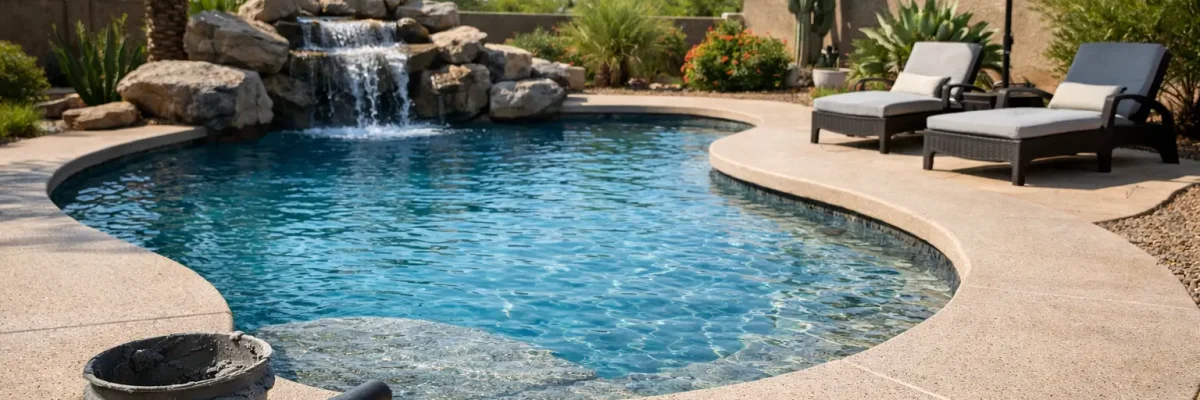
A pool deck can look tired long before the pool itself does. Faded color, rough patches, hairline cracks, and worn sealers are common around Phoenix pools, where intense sun, monsoon moisture, and constant foot traffic put concrete to work. This pool deck resurfacing guide explains how to evaluate the surface, choose an appropriate finish, and plan a project that improves both appearance and day-to-day use.
What Pool Deck Resurfacing Actually Solves
Resurfacing is more than applying a fresh color over old concrete. It is a surface-renewal process designed to address cosmetic wear, light surface damage, and outdated finishes. Depending on the deck’s condition, the work may include crack repair, grinding, cleaning, a bonding layer, a textured overlay or coating, and a protective topcoat.
The right system can give a worn deck a more consistent color, a more comfortable walking surface, and better traction around the water. It can also help make an older backyard feel coordinated with a newly painted exterior, updated patio furniture, or refreshed landscaping.
Resurfacing is not the answer to every concrete problem. A coating cannot correct a slab that is moving, severely heaved, settling, or breaking apart in multiple areas. Expansion joints, drainage problems, and structural cracks need to be assessed before cosmetic work begins. Covering those issues without a repair plan can lead to a finish that cracks or peels prematurely.
Pool Deck Resurfacing Guide: Start With the Concrete
A close inspection determines whether the deck is a good candidate for resurfacing and what preparation it will require. Look beyond the overall color. The condition of the concrete below the finish matters most.
Hairline cracks are common in Arizona concrete and can often be repaired as part of the prep process. Small chips, minor spalling, and surface pitting may also be manageable with patching and an overlay. Areas where old paint or coating is peeling require special attention because loose material must be removed before a new system is installed.
More serious warning signs include wide or actively growing cracks, sections that sound hollow, persistent standing water, crumbling edges, and uneven slabs that create a trip hazard. Those conditions may call for concrete repair, drainage corrections, or replacement in select areas before resurfacing moves forward.
A professional estimate should identify these distinctions clearly. Homeowners should know whether the proposed work is a cosmetic coating, a thicker resurfacing system, or a repair-first project. That clarity helps prevent surprises once preparation begins.
Choose a Finish for How You Use the Space
There is no single best pool deck finish for every Phoenix property. The right choice depends on the deck’s current condition, how much direct sun it receives, the desired look, and whether the space serves a busy family, a rental property, or a commercial setting.
Textured acrylic coatings are a popular choice for pool areas because they can provide color, traction, and a softer visual finish than plain concrete. With the right texture and color selection, they are well suited to everyday pool traffic. Lighter shades generally stay more comfortable underfoot than dark colors, although no coating remains cool in full Arizona sun all day.
Polymer-modified overlays are often a better fit when the existing deck has widespread cosmetic wear, shallow imperfections, or an uneven-looking surface. These systems can create a more substantial new finish and can be customized with texture or decorative patterns. They require careful surface preparation and proper curing conditions, so installation quality has a direct effect on durability.
Concrete stain may be appropriate when the slab is in good shape and the goal is to enhance rather than disguise its natural character. Stain does not hide patches, cracks, or heavily weathered areas as effectively as an overlay. It is typically best for homeowners who like a more variegated, concrete-forward appearance.
Epoxy performs well in many interior, garage, and protected concrete applications, but it is not automatically the right choice for an exposed pool deck. Direct ultraviolet exposure, heat, and slip resistance all need to be considered. A qualified contractor can recommend whether a pool-specific coating system, texture, and topcoat are better suited to the space.
Preparation Is Where a Long-Lasting Finish Begins
Most premature coating failures trace back to poor preparation, not a bad color choice. A pool deck collects sunscreen, body oils, hard-water deposits, dirt, and residue from previous sealers. Any of these can interfere with adhesion if they are not properly removed.
The process usually begins with protecting the pool, landscaping, walls, and nearby features. The deck is then thoroughly cleaned and evaluated. Loose paint, weak coating, and failing patches are removed through the method appropriate for the material and site. Cracks and damaged areas are repaired, and the surface is mechanically prepared or otherwise conditioned so the new material can bond correctly.
After repairs are complete, the coating or overlay is applied according to the product system and weather conditions. Texture is not simply decorative. It should be consistent enough to improve footing without becoming uncomfortable to walk on or difficult to clean. A final protective coat may be used to improve wear resistance and help preserve the finish.
This work calls for disciplined timing. Rushing through cleaning, applying material over damp concrete, or skipping cure time to get the pool area back in use can compromise the job. A professional crew should provide clear guidance on when people, furniture, pets, and pool water can safely return to the area.
Plan Around Phoenix Weather and Pool Use
Phoenix weather makes scheduling a practical part of the project. Extreme heat can shorten working times for coatings and overlays, while monsoon humidity and rain can affect curing and surface conditions. The best installation window depends on the specific product, the deck’s exposure, and the forecast, not just the month on the calendar.
If possible, plan resurfacing before a major gathering or pool season rather than immediately before it. The deck needs time for preparation, installation, and cure. Moving patio furniture back too soon or allowing heavy traffic before the finish has developed can leave marks or reduce long-term performance.
For property managers and hospitality properties, phasing may be possible when the layout allows it. Completing one area at a time can reduce disruption, but it also requires careful attention to access, safety barriers, and color consistency between sections.
Color and Texture Should Work Together
Color sets the visual tone of the pool area, but texture determines much of the practical experience. Light beige, sand, soft gray, and warm earth tones are common choices because they complement desert architecture and reflect more heat than charcoal or deep brown. A lighter deck can also make pool water and landscaping stand out.
That said, very light colors can show leaf stains, dust, and patio furniture scuffs more readily. Darker colors may hide some marks but can become uncomfortably hot. The best choice is usually a mid-to-light color that suits the home’s exterior and the amount of shade available.
Texture should be selected with bare feet in mind. A heavy texture may offer added grip, yet it can feel abrasive around a pool. A subtle, evenly applied texture often provides the balanced result homeowners want: better traction without turning the deck into a rough walking surface.
Protect the Investment After Resurfacing
A resurfaced deck does not need complicated maintenance, but it does benefit from regular care. Sweep away leaves and grit, rinse off sunscreen and spills, and use a mild cleaner recommended for the finish when deeper cleaning is needed. Avoid harsh acids, aggressive pressure washing, and metal tools that can damage the coating.
Keep an eye on cracks, chips, and areas where water regularly collects. Addressing small concerns early is less disruptive than waiting until water gets beneath a failing edge. Patio furniture should have protective feet, especially on textured or coated surfaces.
Right Choice Painting, LLC approaches pool deck projects with the same attention to preparation, scheduling, and final inspection that Phoenix-area homeowners expect from an experienced surface-finishing contractor. The goal is not just a cleaner-looking deck on day one, but a finish selected and installed for the way the property is actually used.
A pool deck should make the backyard feel more inviting, not give you another surface to work around. When the concrete is evaluated honestly, the finish fits the environment, and the prep is handled correctly, resurfacing can give the space a safer, more polished foundation for many seasons ahead.