
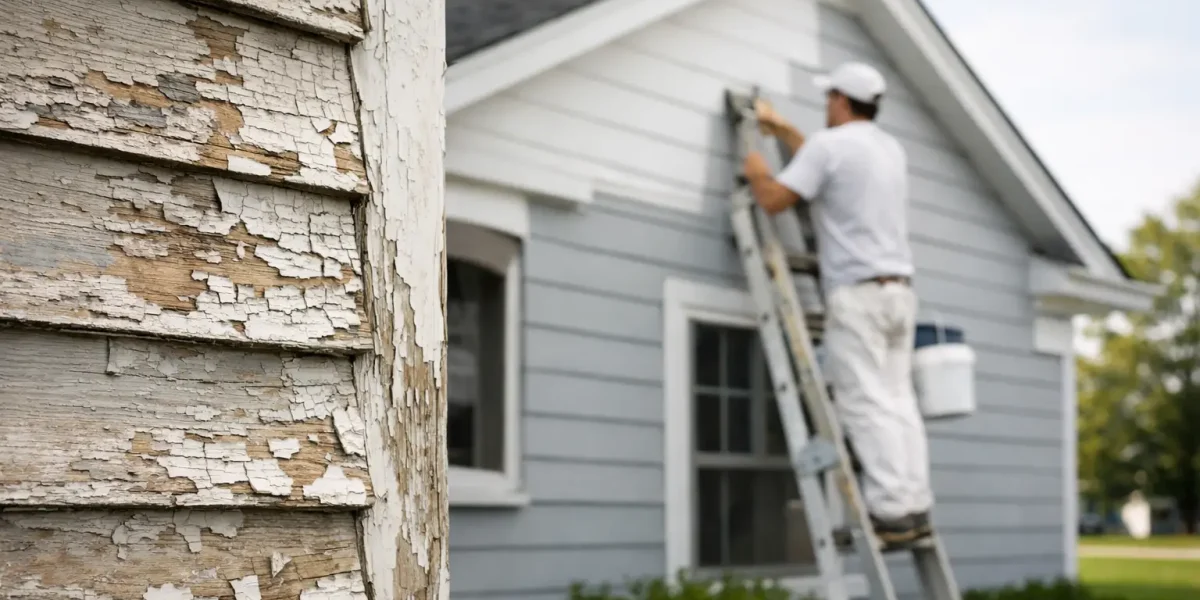
A house in Phoenix does not usually ask politely for fresh paint. It shows up as fading on the sunniest wall, chalky residue on your hand, cracked caulk around trim, or peeling near fascia boards after another long summer. If you are wondering when should house exteriors be repainted, the real answer is not just about age. It is about how your paint is holding up against heat, UV exposure, dust, monsoon moisture, and the specific materials on your home.
For homeowners across Maricopa County, repainting at the right time protects more than appearance. It helps preserve stucco, wood, trim, and other exterior surfaces before small issues become expensive repairs. A well-timed paint job keeps curb appeal strong, but just as important, it keeps the outer shell of your home doing its job.
When should house exteriors be repainted in Arizona?
In the Phoenix area, many homes need exterior repainting roughly every 7 to 10 years, but that range is only a starting point. Some homes need attention sooner, especially if they face intense direct sun, were painted with lower-grade products, or did not receive proper prep the last time around. Others can go longer if the coating system was high quality and the surfaces have been maintained well.
Arizona is not gentle on exterior paint. Dry heat, strong UV rays, dust buildup, and rapid temperature swings can wear coatings down even when there is no dramatic peeling. That matters because many homeowners wait for obvious failure, when the better approach is to repaint while the existing coating is still mostly intact. Repainting at that stage is usually simpler, cleaner, and more cost-effective than waiting until surfaces are exposed or damaged.
The clearest signs it is time to repaint
Paint does not fail in just one way. Sometimes it peels. More often in our climate, it fades, chalks, or loses its ability to protect. If you are seeing one or two minor issues, you may still have some time. If several are happening at once, it is usually time to schedule an estimate.
Fading and uneven color
Sun-faded paint is one of the first signs Arizona homeowners notice. South- and west-facing walls often lose color faster because they take the harshest afternoon exposure. If one side of the house looks noticeably lighter, duller, or washed out than the rest, the coating is aging even if it has not started peeling.
Chalking on the surface
Run your hand across the siding or stucco. If a powdery residue comes off, that is chalking. It means the paint film is breaking down under UV exposure. A little chalking can happen over time, but heavy chalking tells you the paint is nearing the end of its useful life.
Cracking, peeling, or bubbling
These are more urgent signs. Cracking and peeling mean the coating is no longer adhering well, and bubbling can point to trapped moisture or surface failure underneath. Once paint starts separating from the surface, protection drops fast.
Caulk failure around joints and trim
Sometimes the issue is not the field paint itself but the seal around windows, doors, trim lines, and penetrations. If caulk is cracked, shrunken, or missing, water can get in during storms and create bigger problems. Repainting often goes hand in hand with re-caulking because the system works best when everything is sealed properly.
Bare spots, exposed wood, or damaged stucco patches
If substrate is visible, the repaint is overdue. Exposed wood can dry out, split, and absorb moisture. Stucco patches that stand out, flash through the finish, or show wear can also signal that the coating is no longer performing evenly.
Material matters more than most homeowners expect
A common mistake is assuming every exterior follows the same repaint timeline. It does not. The surface under the paint changes how long the finish lasts.
Stucco homes are common in Phoenix and can hold paint well, but they still take a beating from the sun. Hairline cracks, patching, and chalking often show up before total paint failure. Wood trim and fascia usually need closer attention because they expand, contract, and weather differently than stucco. Painted block walls, doors, garage doors, and metal elements can all age on separate timelines too.
That is why a good repaint assessment looks at the whole exterior system, not just the main body color. A home may not need a full repaint everywhere at once, but trim, shutters, doors, or high-exposure areas may need work earlier.
Why the last paint job affects the next one
When homeowners ask how often they should repaint, the previous job tells part of the story. High-quality coatings, correct primers, proper surface repair, and thorough prep can add years to an exterior finish. Rushed prep, thin coverage, poor caulking, or the wrong product for the material can shorten that lifespan significantly.
This is especially true in Arizona. The climate exposes shortcuts quickly. If dirt was painted over, if cracks were not addressed correctly, or if the paint line was weak around edges and joints, those areas tend to fail first. A repaint done the right way is not just about color. It is about extending the life of the whole exterior envelope.
The best time of year to repaint in Phoenix
The best repaint timing is not only about how old the paint is. It is also about choosing the right season for application. In the Phoenix metro area, exterior painting is usually best scheduled during milder weather, when temperatures allow products to cure properly and crews can work consistently across the full surface.
Extreme summer heat can create challenges, especially on sun-facing walls that heat up far beyond the air temperature. Monsoon season can also complicate scheduling because wind, dust, and sudden moisture affect preparation and drying. Fall, winter, and spring are often the most favorable windows, though exact timing depends on the product, the surface temperature, and the condition of the home.
A professional contractor will look beyond the forecast and pay attention to substrate temperature, sun exposure, and daily working conditions. That matters because even the best paint can underperform if it is applied outside the right range.
Should you repaint before the paint fails completely?
Usually, yes. Waiting for dramatic peeling may feel like getting the most value out of the old paint, but it often means the surface has already started to suffer. Repainting before full failure usually reduces prep complexity and helps protect the materials underneath.
There is a cost trade-off here. Repainting a little earlier can feel premature if the house still looks acceptable from the street. But repainting too late can lead to more patching, more carpentry repair, more caulking replacement, and more labor overall. For many homeowners, the smart move is to repaint when wear is visible and performance is declining, not after damage spreads.
A simple way to judge your own exterior
Stand back from the house first, then get close. From the curb, look for uneven color, sun-faded elevations, and trim that no longer looks crisp. Up close, inspect caulk lines, corners, fascia, window surrounds, and any horizontal or high-exposure surfaces.
If the home is around the 7- to 10-year mark and you are noticing fading, chalking, or minor cracking, it is probably time for a professional evaluation. If the house is newer but already showing failure, that often points to product or prep issues from the previous project. In either case, catching it early gives you more options.
For property managers and business owners, the timing question is even more practical. A weathered exterior can affect tenant perception, guest experience, and ongoing maintenance costs. Repainting on a planned schedule is usually easier than reacting to visible deterioration after complaints start.
What a professional inspection should include
A reliable exterior paint assessment should go beyond giving you a number. It should identify what surfaces are sound, what areas need repair, whether a full repaint is necessary, and what products make sense for the material and exposure level.
That is especially important in a market like ours, where one elevation can age much faster than another. An experienced local contractor should be able to explain whether the issue is cosmetic, protective, or both. At Right Choice Painting, that kind of clarity matters because homeowners deserve to know what condition their exterior is really in before they invest in the next step.
If you are asking when should house exteriors be repainted, the best answer is this: repaint when your home starts showing wear that affects protection, not just appearance. A strong exterior finish should still look good, but more importantly, it should still be doing its job. When it is not, acting sooner is usually the right choice.