
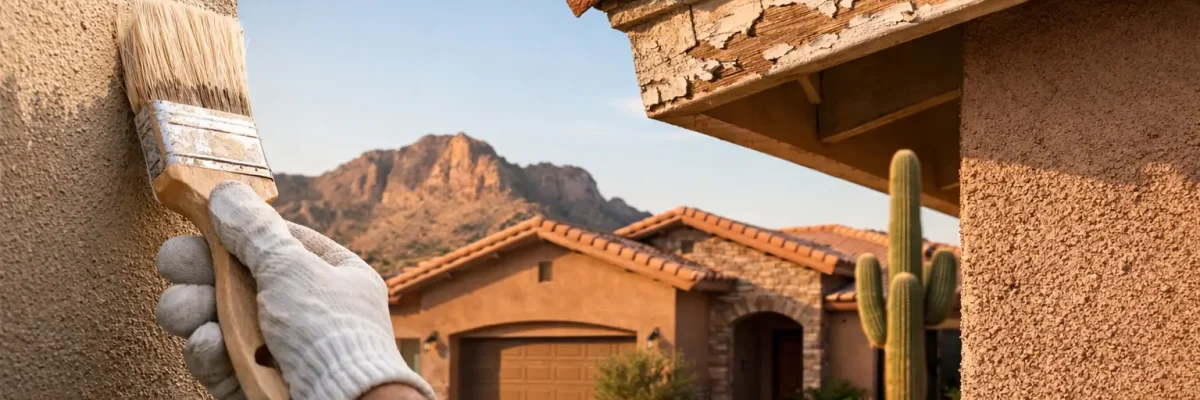
By the time a Phoenix summer has baked a stucco wall for a few seasons, homeowners start asking the same practical question: how long does exterior paint last in Arizona? The short answer is usually 5 to 10 years, but that range can shift quite a bit depending on the surface, paint quality, prep work, sun exposure, and how well the last job was done. In Arizona, exterior paint does not fail on the same timeline you might expect in milder climates, and that matters when you are protecting both appearance and the building itself.
How Long Does Exterior Paint Last in Arizona on Average?
In most of the Phoenix metro area, a professionally painted exterior can hold up around 7 to 10 years on stucco when premium products and proper prep are used. On wood and trim, the lifespan is often shorter, closer to 4 to 7 years, especially on elevations that get intense afternoon sun. Metal surfaces can vary, but many last 5 to 8 years if they are properly primed and coated.
That said, averages only tell part of the story. Two homes in the same neighborhood can age very differently. A house with full western exposure, darker colors, and older paint underneath may show fading or breakdown much sooner than a shaded home painted with higher-grade coatings.
Arizona is simply a harsher environment for exterior finishes. Paint here is asked to handle relentless UV exposure, long dry stretches, dust, monsoon moisture, and major temperature swings between day and night. Even the best paint system has limits when it is working under those conditions year after year.
Why Arizona Paint Life Is Different
The biggest factor is the sun. UV rays gradually break down binders in paint, which leads to fading, chalking, and surface wear. In the Phoenix area, south- and west-facing walls usually age fastest because they absorb the most direct heat and sunlight.
Heat also plays a role beyond simple fading. Exterior surfaces expand and contract as temperatures rise and fall. Over time, that movement can stress the coating, especially around joints, trim lines, fascia, and repaired cracks. If the surface was not cleaned, sealed, and primed correctly before painting, those weak points tend to show up earlier.
Dust is another local issue. Fine desert dust settles into exterior surfaces and can slowly wear on the finish. Then monsoon season adds a different challenge. Wind-driven rain can exploit cracks, failed caulking, and thin paint coverage. Arizona is dry most of the year, but that does not mean moisture is irrelevant. Water intrusion often becomes obvious only after the protective paint film has already started to weaken.
Surface Type Makes a Big Difference
Stucco is common across Maricopa County, and it generally performs well with exterior paint because it is durable and holds coatings nicely when properly prepared. Still, stucco is porous. If it develops hairline cracks or has old, chalky paint left in place, the new coating may not last as long as expected.
Wood is more vulnerable in Arizona. Fascia boards, eaves, garage trim, and decorative wood details tend to dry out faster and can crack or peel sooner than stucco. If those areas are exposed to direct sun, they often become the first places where repainting is needed.
Metal surfaces, including wrought iron and garage doors, can also have a shorter maintenance cycle. The paint itself may hold, but fading and heat stress can become noticeable earlier than on shaded wall areas. Rust is less common than in wetter regions, but once coatings fail and water gets into vulnerable spots, repairs can escalate.
What Makes Exterior Paint Last Longer?
A lasting paint job starts long before the first coat goes on. Surface prep is what separates a finish that looks good for a year or two from one that holds up for the long term. That means pressure washing or thorough cleaning, scraping loose material, repairing cracks, sealing gaps, spot priming bare areas, and using products suited to the surface.
Paint quality matters too. Lower-grade paint may save money upfront, but it often gives that money back in a shorter repaint cycle. Better exterior coatings typically offer stronger UV resistance, better adhesion, and more flexibility during temperature changes. In Arizona, those performance differences are not minor. They can add years to the life of the job.
Color choice also affects longevity. Darker colors usually absorb more heat, which can increase surface temperature and speed up fading on sun-heavy elevations. That does not mean you have to avoid bold colors, but it does mean expectations should be realistic. A deep brown or charcoal exterior may need attention sooner than a lighter beige or off-white painted with the same product.
Application timing is another overlooked factor. Paint should be applied within the manufacturer’s recommended temperature range. If coating is applied when surfaces are too hot, adhesion and curing can suffer. In Arizona, skilled scheduling is part of doing the job right.
Signs It Is Time to Repaint
Sometimes the need to repaint is obvious, and sometimes it starts with subtler signs. Fading is common in Arizona and often appears first on the sides of the building with the most sun. Chalking, where a powdery residue comes off on your hand, is another sign the paint film is breaking down.
Cracking, peeling, and blistering are more urgent. Those usually mean the coating is no longer protecting the surface the way it should. On stucco, hairline cracking around patched areas or trim transitions can be an early warning that maintenance has been delayed too long. On wood, flaking paint and exposed bare spots can quickly lead to larger repairs if left alone.
You may also notice caulking failure around windows, doors, and joints. Technically that is not paint failure alone, but it often shows up around the same time and affects the overall performance of the exterior system. Repainting is often the right moment to address all of it together.
How Long Does Exterior Paint Last in Arizona if the Last Job Was Poor?
If the previous contractor skipped prep, used bargain materials, or applied paint in poor conditions, the lifespan can drop well below the usual range. We sometimes see homes that need major touch-ups or full repainting in just 3 to 5 years, especially where peeling paint was simply coated over instead of removed and repaired.
That is why estimates should cover more than color and square footage. Homeowners and property managers should want clear information about prep steps, repairs, primers, coating type, number of coats, and inspection standards. A cheaper bid can turn expensive fast if the finish fails early.
For commercial properties, the stakes are even higher. A worn exterior affects curb appeal, tenant perception, and maintenance budgets. Businesses often benefit from a proactive schedule instead of waiting until failure is visible from the parking lot.
A Practical Repaint Timeline for Phoenix-Area Properties
For many stucco homes, it makes sense to start evaluating the exterior closely around year 5, even if the finish still looks good at a glance. By year 7, a professional inspection can help determine whether you need a few repairs and touch-ups or whether it is smarter to plan for a full repaint before deterioration spreads.
Wood trim, doors, garage doors, and wrought iron often deserve attention sooner. These surfaces may need maintenance painting on a different cycle than the main body of the house. Treating the whole exterior as one timeline can cause trouble because some materials age much faster than others.
For HOA communities, multifamily properties, offices, retail buildings, and hospitality spaces, consistency matters. A repaint schedule based on the most exposed elevations and highest-visibility areas usually delivers better value than waiting for every wall to wear equally.
In a market like Phoenix, dependable workmanship is what gives paint its best chance to last. Right Choice Painting works with homeowners and commercial clients across the area who want more than a quick cosmetic update. They want an exterior that looks clean, performs well, and holds up under real Arizona conditions.
If you are not sure whether your exterior has two years left or needs attention now, the smartest move is not to guess. Look at the sunniest sides of the property, inspect trim and caulking, and pay attention to fading, chalking, or cracking before those small issues turn into bigger repairs.