
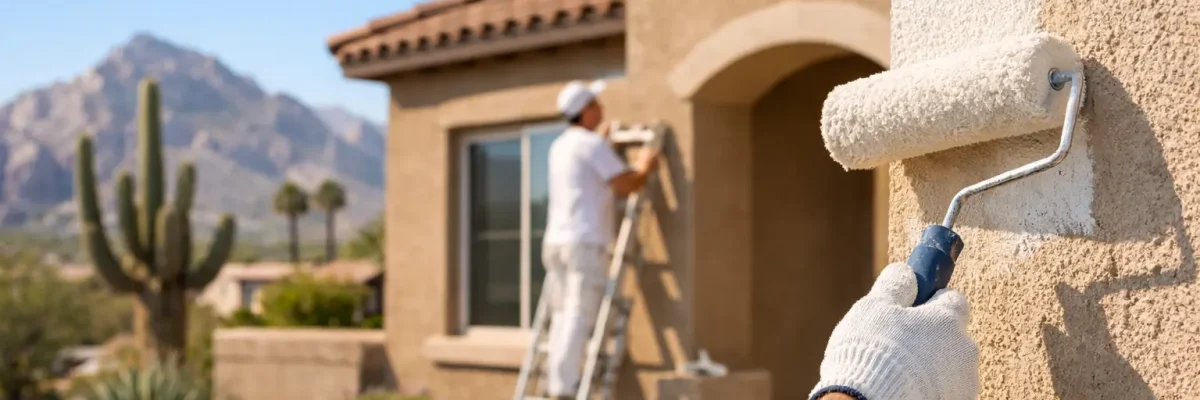
A stucco home can look solid long after its paint system has started to fail. In Phoenix, sun exposure, extreme heat, monsoon moisture, and windblown dust put exterior coatings under constant pressure. Homeowners often ask, “How often should stucco be painted?” The practical answer is usually every 5 to 10 years, but the condition of the stucco and the quality of the last paint job matter more than the calendar.
A professionally prepared and painted exterior can stay attractive and protective for years. A rushed job, poor-quality coating, or skipped repair work can leave a home needing attention far sooner. Knowing what to watch for helps you schedule repainting before minor surface issues become larger repairs.
How Often Should Stucco Be Painted?
For most homes in the Phoenix metro area, stucco should be repainted about every 5 to 7 years on heavily exposed elevations and every 7 to 10 years on more protected surfaces. South- and west-facing walls usually take the hardest hit from Arizona sun. These areas may fade, chalk, or develop hairline cracking before the rest of the home.
That range is not a guarantee. A house with premium exterior paint, proper surface preparation, and thoughtful maintenance may stay in great shape closer to the 10-year mark. A home painted with lower-grade materials, or one with existing moisture and cracking issues, may need repainting in as little as 3 to 5 years.
Paint is more than a color update. On stucco, a quality coating helps limit moisture intrusion, protects patched areas, and keeps the exterior looking cared for. Waiting until paint is peeling or the stucco is visibly damaged often means a more involved project.
Phoenix Weather Changes the Painting Schedule
Stucco performs well in dry climates, but Phoenix weather still creates demanding conditions for painted surfaces. Intense UV exposure gradually breaks down the binders in exterior paint. This is why bright colors may fade and dark colors may look uneven sooner than expected.
Summer heat also causes building materials to expand and contract. Over time, this movement can create small cracks in stucco or reopen older repairs. During monsoon season, wind-driven rain can push moisture into cracks, gaps around windows, and unsealed transitions. The surface may dry quickly afterward, but trapped moisture can weaken paint adhesion.
Dust is another local factor. It does not necessarily mean a home needs repainting, but it can hide fading, chalking, and surface wear. Washing the exterior periodically makes it easier to see the true condition of the coating and prevents dirt buildup from dulling the finish.
Signs Your Stucco Needs Painting Sooner
Age is a useful starting point, but the exterior itself gives the clearest answer. Walk around the home in daylight and pay close attention to the sun-facing walls, window surrounds, trim transitions, and areas below rooflines.
Repainting should be considered when you see several of these conditions:
- Faded or uneven color, especially on south- and west-facing walls
- Chalking, where a powdery residue comes off on your hand or clothing
- Peeling, flaking, bubbling, or bare areas in the paint film
- Hairline cracks, larger stucco cracks, or cracking around windows and doors
- Stains from water runoff, rust, irrigation overspray, or mildew
- Caulk that has split, shrunk, or pulled away from joints
Hairline cracking is common in stucco and does not always signal a structural concern. Still, it should be evaluated before painting. Simply rolling paint over cracks without the right repair method can leave them visible or allow moisture to work behind the coating. Wider, recurring, or diagonal cracks deserve closer inspection to identify whether movement, drainage, or substrate issues are involved.
Paint Quality and Prep Make a Major Difference
The best repainting interval is built into the work before the first coat goes on. Stucco needs a clean, stable surface for paint to adhere properly. That means removing dirt and chalking, addressing loose or failing paint, repairing cracks, and allowing surfaces to dry fully before coating.
Primer selection matters too. Depending on the condition of the stucco, a masonry conditioner or bonding primer may be needed to create a more uniform surface and improve adhesion. Skipping this step to save time can lead to uneven sheen, premature fading, or peeling in problem areas.
The finish coat should be a high-quality exterior paint designed for masonry or stucco. Elastomeric coatings can be a good option for certain homes because they create a thicker, flexible film that can help bridge fine hairline cracks. They are not the right answer for every surface, however. Proper application thickness, existing paint condition, and moisture management all need to be considered. A coating cannot solve an active leak or a drainage problem.
Color choice also affects longevity. Very dark exterior colors absorb more heat, which can place additional stress on the coating and substrate. Light and mid-tone colors generally perform well in the desert sun and can help reduce visible fading. For homeowners planning a dramatic color change, a professional can recommend products and primers suited to the existing finish and new color.
When Maintenance Is Enough and When Repainting Is Better
Not every weathered-looking stucco exterior needs a full repaint immediately. If the paint is still firmly bonded, the color remains fairly consistent, and cracks are limited to a few small areas, targeted repairs and touch-ups may buy useful time. Cleaning irrigation stains, replacing failed caulk, and repairing small chips can preserve the appearance between full painting projects.
A full repaint makes more sense when fading is widespread, chalking affects multiple walls, or repairs are becoming too noticeable to blend. It is also a smart time to repaint when selling a home, completing a roof or window project, or updating exterior trim and garage doors. Coordinating these improvements can create a more finished look while avoiding duplicate prep work later.
Property managers should take a proactive approach. A regular exterior review helps protect curb appeal and allows painting to be planned around tenant schedules, peak business periods, or hospitality occupancy. Waiting for widespread coating failure can turn a straightforward maintenance project into one with more repair requirements and operational disruption.
The Best Time to Paint Stucco in Arizona
Phoenix has a long painting season, but weather conditions still matter. Exterior coatings need temperatures and surface conditions within the manufacturer’s recommended range. Extremely hot afternoons can cause paint to dry too quickly, while moisture from rain or heavy humidity can interfere with adhesion and cure time.
Spring and fall often provide the most predictable conditions for exterior work. Early morning scheduling can also help crews work efficiently during warmer months, especially on walls that receive intense afternoon sun. A dependable contractor will assess the forecast, surface temperature, and drying conditions rather than treating every day as equal.
Preparation should include protecting landscaping, windows, walkways, and exterior fixtures. It should also include a final walkthrough to confirm repaired areas, coverage, straight lines, and cleanup meet expectations. Those details are part of what separates a quick color change from a lasting exterior paint project.
A Simple Inspection Routine for Homeowners
Inspect stucco at least once a year, preferably before monsoon season and again after it. Look for new cracks, failing caulk, water stains, and paint wear around rooflines, patio covers, windows, and hose bibs. Keep irrigation heads aimed away from the home, since constant overspray can stain stucco and create unnecessary moisture exposure.
If you are uncertain whether your home needs touch-ups, repairs, or a complete repaint, an on-site assessment is the most reliable next step. Right Choice Painting helps Phoenix-area homeowners and property owners evaluate surface condition, choose coatings suited to local weather, and complete detailed prep before painting begins.
A well-timed stucco repaint protects more than curb appeal. Address the small warning signs while they are still manageable, and your exterior will be better prepared for the next stretch of Arizona sun, wind, and rain.