
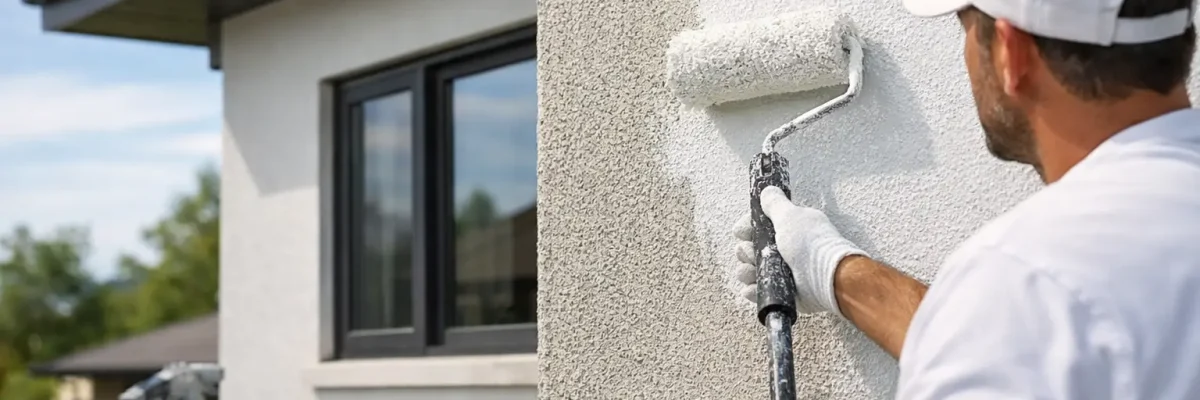
Phoenix stucco has a hard job. It faces intense sun, sharp temperature swings, monsoon moisture, blowing dust, and years of small building movement. This elastomeric coating for stucco review looks at whether this thick, flexible exterior coating is a smart answer for those conditions, and when standard exterior paint may be the better value.
For many Arizona homes and commercial properties, elastomeric coating can provide meaningful protection and a clean, uniform finish. It is not a shortcut, though. Its performance depends heavily on surface preparation, repair quality, product selection, and proper application. A premium coating installed over loose paint, moisture damage, or untreated cracks will not solve the underlying problem.
What Elastomeric Coating Does for Stucco
Elastomeric coating is a high-build acrylic coating designed to stretch and move more than conventional exterior paint. Once cured, it forms a thicker film over the stucco surface. That flexibility helps it bridge many small, nonstructural hairline cracks that would otherwise show through a typical paint job.
On stucco, that matters because fine cracks are common. Some result from normal curing and settling, while others develop as the building expands and contracts in the desert heat. A quality elastomeric system can create a more continuous weather barrier, helping reduce water intrusion through small surface imperfections.
It also produces a fuller, more even appearance than standard paint. Older stucco can look dry, uneven, and heavily textured after years of sun exposure. The added film build of an elastomeric product can improve color uniformity and give the exterior a more finished look without hiding the character of the stucco texture.
That said, elastomeric coating is not intended to repair every crack. Wide cracks, recurring cracks, cracks around windows and doors, or cracks that show signs of movement should be evaluated and repaired correctly before coating begins. A coating can stretch, but it cannot correct structural movement, failed flashing, or water entering from behind the stucco.
Elastomeric Coating for Stucco Review: The Real Benefits
The strongest reason to choose elastomeric coating is protection, not simply appearance. Applied correctly, it can help keep wind-driven rain and monsoon moisture from working into the tiny openings often found in aged stucco. That extra protection is especially valuable on exposed west- and south-facing walls that receive the most direct Arizona sun.
Flexibility is another major advantage. Conventional exterior paint can eventually become brittle as it weathers. Elastomeric coatings are formulated to remain more elastic, allowing the coating film to accommodate minor surface movement. For homes with widespread hairline cracking, that can reduce the cycle of repainting and touching up visible crack lines.
Homeowners also appreciate the finish. Because these coatings are thicker, they can make worn stucco look more consistent from curbside. The result is often a more polished exterior, particularly when paired with careful trim, fascia, door, and garage door painting.
There is a cost consideration, of course. Elastomeric systems usually cost more than a standard exterior paint application because the materials are more expensive and the preparation standards should be higher. The right comparison is not the lowest initial price. It is whether the coating addresses the actual condition of the stucco and can provide longer-lasting value for the property.
Where Elastomeric Coating Has Limits
A common misunderstanding is that a thick coating can cover any problem. It cannot. If the stucco is chalking heavily, delaminating, crumbling, or holding moisture, those issues need attention first. Coating over compromised material can trap the problem beneath a new finish and lead to premature failure.
Breathability also deserves consideration. Stucco needs to manage moisture properly. A professional should select a compatible product and avoid creating a coating system that holds moisture where it should be able to escape. This is particularly important on walls with prior water damage, questionable drainage, or areas near rooflines, parapets, and window penetrations.
Texture is another trade-off. Elastomeric coatings can soften the sharpness of a very fine stucco texture because they build a thicker film. Most homeowners find that acceptable or even desirable, but it should be discussed before work starts. On highly decorative or delicate textures, a different coating approach may preserve more detail.
Finally, not every stucco home needs elastomeric coating. If the stucco is in sound condition with minimal hairline cracking, a high-quality acrylic exterior paint may deliver excellent results at a lower cost. A dependable contractor should recommend the system that fits the surface, not automatically sell the thickest coating available.
Proper Prep Makes the Difference
The coating application itself is only one part of a durable stucco project. Preparation determines whether the new finish has a clean, stable surface to bond to.
A thorough process starts with inspection. The painter should look for failing paint, chalking, stains, cracks, loose stucco, caulk failure, and signs of active moisture entry. Areas around windows, doors, hose bibs, roof transitions, and exterior fixtures often need close attention because they are common points of water intrusion.
The surface then needs cleaning. In Phoenix, dust and oxidation can build up quickly, and a coating applied over a dirty wall is likely to lose adhesion. Depending on the condition of the home, preparation may include pressure washing at an appropriate setting, hand cleaning problem areas, scraping loose material, and allowing the walls to dry fully.
Crack repair comes next. Small static cracks may be filled with a compatible patching material or elastomeric sealant. Larger cracks need more investigation. The goal is not to make every line disappear for a day. It is to create a stable repair that works with the coating system.
Priming may be necessary on bare stucco, repaired sections, severely chalky surfaces, or areas with staining. The correct primer helps create an even foundation so the finish coat performs consistently across the wall. Skipping this step can save time upfront but create uneven sheen, adhesion issues, or early wear later.
Application Standards to Ask About
Elastomeric coating is often applied by roller, brush, spray equipment, or a combination of methods. The method matters less than achieving the manufacturer-required coverage rate and dry film thickness. A coating that is spread too thin may look fine initially but will not provide the crack-bridging and weather protection the product was designed to deliver.
Professional application also means watching the weather. Even in the Phoenix area, surface temperature, direct sun, humidity, wind, and the chance of rain can affect application and cure time. Painting a wall that is excessively hot or rushing a second coat before the first has cured can compromise the finish.
Ask your contractor what repairs are included, whether primer will be used where needed, how cracks will be addressed, and how coverage will be measured. A clear written scope is more useful than a vague promise of “two coats,” since products differ significantly in required thickness and application rates.
Is It Worth It for Your Property?
Elastomeric coating is often worth the investment when stucco has widespread hairline cracks, strong sun exposure, weathering, or a history of minor water entry through the surface. It can be an especially practical choice for homeowners who plan to stay in the property and want a finish built for long-term exterior protection.
For commercial properties, the same decision often comes down to appearance, maintenance planning, and minimizing future disruption. A well-prepared coating system can help maintain a professional exterior while reducing the frequency of visible crack repairs and cosmetic touchups.
Right Choice Painting evaluates exterior surfaces before recommending a coating approach because every building has different exposure, repair needs, and budget priorities. The best outcome comes from matching the product to the wall condition, then completing the prep and application with the same care as the finish work.
If your stucco looks faded, cracked, or uneven, start with an honest inspection rather than a one-size-fits-all product decision. The right coating system should protect your property, improve its appearance, and give you confidence each time you pull into the driveway.