
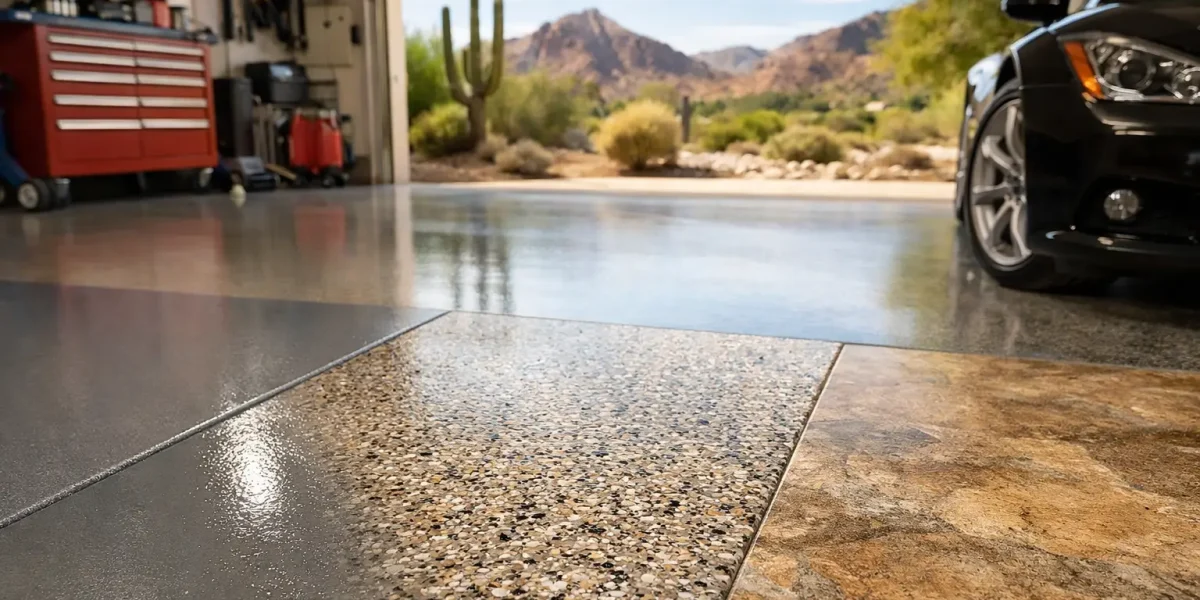
A garage floor in Phoenix takes more abuse than most homeowners expect. Hot tires, concrete dust, oil drips, lawn equipment, storage cabinets, and intense sunlight near the garage opening can quickly make bare concrete look worn. The best garage floor coating options protect that surface while giving the space a cleaner, more finished appearance. The right choice depends on how you use the garage, the condition of the slab, your budget, and how quickly you need the space back in service.
A professional coating is more than a cosmetic upgrade. It can make routine cleanup easier, reduce concrete dust, improve stain resistance, and help turn a garage into a space that feels like part of the home instead of an unfinished storage area. For workshops, commercial storage areas, and high-traffic residential garages, the product and preparation process matter just as much as the final color.
Best Garage Floor Coating Options Compared
Epoxy, polyaspartic, polyurea, and concrete paint are often grouped together, but they do not perform the same way. Each has a place, and a dependable recommendation starts with an honest look at the floor and the homeowner’s priorities.
Epoxy Floor Coatings
Epoxy remains one of the most recognized garage floor coating choices because it creates a thick, durable surface with strong adhesion when installed over properly prepared concrete. It is available in solid colors, decorative flake systems, metallic finishes, and clear topcoats. A full epoxy system can give a garage a polished, professional appearance while standing up well to vehicle traffic, common automotive fluids, and everyday wear.
For many Phoenix homeowners, epoxy is a practical choice when the garage can remain empty during the curing process. Depending on the system and site conditions, epoxy typically needs more time to cure than fast-setting alternatives. Temperature and moisture conditions must also be managed carefully during installation. That additional time is worthwhile when the goal is a substantial, attractive coating with a wide range of design options.
Epoxy does have limits. Some epoxy products can amber or yellow with extended UV exposure, particularly near an open garage door or in a sun-exposed workspace. A quality UV-stable topcoat can help address that concern. Epoxy also depends heavily on concrete preparation. If the slab has moisture issues, old sealer, failing paint, or contamination from oil, applying epoxy without correcting those problems can lead to peeling.
Polyaspartic Coatings
Polyaspartic coatings are a strong option for homeowners who want quick installation, excellent color retention, and a hard-wearing finish. They are commonly used as part of a multi-layer system, often over an epoxy or polyurea base coat with decorative vinyl flakes and a clear protective topcoat.
One major advantage is cure speed. Many polyaspartic systems can be installed and returned to service much faster than traditional epoxy, which is valuable for homeowners who need to park in the garage soon after the project is completed. Polyaspartic coatings also offer good resistance to UV exposure, helping the finish maintain its appearance near doors, windows, and other areas that receive bright Arizona sun.
The trade-off is that these materials have a shorter working time. That makes professional application especially important. A crew needs to prepare the floor correctly, apply each layer evenly, and maintain proper timing throughout the installation. Polyaspartic systems can also carry a higher upfront cost, but their quick turnaround and long-term appearance can make them a worthwhile investment for an actively used garage.
Polyurea Coatings
Polyurea is another high-performance coating option known for flexibility, fast curing, and strong resistance to impacts and chemicals. It is often selected for garages that see frequent vehicle use, tools being moved around, or significant temperature swings. In the Phoenix area, a professionally installed polyurea system can be an excellent fit when durability and a rapid return to use are priorities.
Because polyurea coatings cure quickly, they require careful installation conditions and experienced handling. They are not ideal for a casual weekend application. Like polyaspartic systems, polyurea is often paired with decorative flakes and a UV-stable topcoat to create a complete garage floor system rather than a single layer of material.
Homeowners comparing polyurea and polyaspartic coatings will find substantial overlap. Both can be durable, fast-curing, and suitable for Arizona conditions. The better choice often comes down to the specific product system, the slab’s condition, the desired finish, and the contractor’s recommended application method.
Concrete Paint and Single-Part Coatings
Concrete paint and single-part garage floor coatings are usually the lowest-cost option. They can improve the look of a clean, lightly used garage, especially when the goal is a quick refresh before organizing, selling, or renting a property. They are also available in many home improvement stores and can be applied with relatively basic tools.
However, paint is not the same as a professional resinous coating system. It is generally thinner, less resistant to hot-tire pickup, and more likely to wear through or peel in high-traffic areas. A painted floor may be appropriate for a low-demand space, but it is rarely the best long-term answer for garages used daily by vehicles, recreational equipment, or a home workshop.
Concrete Stain and Sealer
For homeowners who prefer the natural character of concrete, staining and sealing can provide a more subtle result. Concrete stain changes the color of the slab without creating the thicker film associated with epoxy or polyaspartic coatings. A clear sealer then helps protect the surface from dust and minor staining.
This option works well when the concrete has an attractive, uniform appearance and the garage will not face heavy chemical exposure. It is less forgiving of cracks, patches, and discoloration because those existing variations can remain visible. Stain and sealer offer a clean, understated finish, but they do not provide the same level of protection as a multi-layer epoxy, polyurea, or polyaspartic system.
Why Surface Preparation Determines the Result
The coating itself gets most of the attention, but concrete preparation is what determines whether the finish performs as intended. A garage slab may look clean while still holding oil, old sealers, curing compounds, moisture vapor, or residues that interfere with adhesion.
Professional preparation commonly includes evaluating the concrete, repairing cracks and spalls, removing failed coatings, cleaning contaminated areas, and mechanically profiling the surface. Mechanical grinding creates the texture needed for the coating to bond properly. Acid etching may be used in limited situations, but it does not replace thorough mechanical preparation for many higher-performance systems.
Moisture deserves special attention. Concrete can release moisture vapor even when it appears dry at the surface. If a slab has elevated moisture levels, the coating system must be selected and installed accordingly. Skipping this assessment can lead to blisters, bubbling, or delamination later. A contractor who takes time to inspect the slab is protecting the investment, not delaying the project.
Choosing the Right Finish for Your Garage
A decorative flake floor is one of the most popular choices because it hides dust, minor debris, and everyday marks better than a solid color. Flakes are available in neutral blends that complement cabinets, wall colors, and exterior finishes, creating a coordinated look without making the garage feel overly glossy or industrial.
Solid-color floors offer a cleaner, more modern appearance and can work especially well in organized garages with built-in storage. They may show dust and tire marks more readily than flake finishes, so they are best for homeowners who want a more uniform visual effect and do not mind regular cleaning.
Finish texture also matters. A completely smooth coating can become slippery when wet, particularly near vehicles during monsoon season or around water heaters and laundry areas. A professional installer can add an appropriate traction additive to improve footing without making the floor difficult to sweep or mop.
What Phoenix Homeowners Should Prioritize
Arizona heat changes the conversation. Garages can become extremely hot, and surfaces near the door receive considerable UV exposure. Choose a system with a topcoat designed to resist yellowing and fading where sunlight is a concern. If you park daily in the garage, ask about hot-tire resistance and realistic cure times before scheduling the work.
Also consider how the garage will function over the next several years. A two-car garage used primarily for parking has different needs than a garage that doubles as a gym, workshop, hobby room, or storage area for heavy equipment. The best system is not always the most expensive one. It is the one that matches the slab, the expected traffic, and the level of finish you want to maintain.
Right Choice Painting approaches garage floor projects with the same focus on preparation, product selection, and final inspection that guides every surface-finishing project. A clear evaluation up front helps prevent surprises and creates a floor that looks finished on day one and continues to perform through years of Phoenix use.
A garage floor should make the space easier to use, easier to clean, and more enjoyable to come home to. Start with the condition of the concrete, choose a coating system built for your daily demands, and give the preparation process the attention it deserves.