
A dated cabinet color can make an otherwise well-kept kitchen feel tired, even when the counters, flooring, and appliances are still in great shape. A professional cabinet painting service gives homeowners a practical way to update the room they use most without taking on the cost, delay, and disruption of a full cabinet replacement. The result should look intentional and durable, not like a weekend paint project that begins chipping around the handles six months later.
For Phoenix-area homeowners, cabinet refinishing is especially appealing during a remodel, before listing a home, or when a kitchen needs a cleaner, more current look. The key is choosing a contractor who understands that cabinets are not walls. They require detailed preparation, the right coating system, controlled application, and a careful final inspection.
When Cabinet Painting Is the Right Investment
Painting is often the right choice when cabinet boxes are structurally sound, doors and drawers operate properly, and the layout still works for your household. Solid wood, quality veneer, and many previously painted cabinet surfaces can be refinished successfully. A fresh color can brighten a dark kitchen, soften heavy wood tones, or bring visual consistency to an open-concept living space.
It is also a smart option for property managers and business owners updating break rooms, office kitchens, reception storage, or hospitality spaces. Refinishing existing cabinetry can improve the appearance of a space while helping control renovation costs and downtime.
That said, cabinet painting is not the answer to every problem. Cabinets with serious water damage, warped boxes, failing hinges, badly cracked doors, or an inefficient layout may need repair or replacement first. Thermofoil and laminate cabinets can sometimes be painted, but they require extra evaluation and specialized prep to make sure the finish will adhere. An experienced contractor should be direct about these trade-offs before work begins.
What a Professional Cabinet Painting Service Includes
The difference between an average cabinet repaint and a polished cabinet refinish is usually decided long before the final coat is applied. Professional work begins with an honest assessment of the cabinet material, existing finish, condition, and desired color. That evaluation helps determine the prep process, primer, and topcoat best suited to the project.
Thorough Prep Protects the Finish
Kitchen cabinets collect cooking oils, fingerprints, cleaning-product residue, and dust in places that are easy to miss. Paint applied over contamination may look fine at first, then peel, blister, or wear prematurely. Proper cleaning and degreasing give the coating a stable surface to bond to.
Next comes sanding or mechanical abrasion. The goal is not to remove every trace of the existing finish in every situation. It is to create the surface profile needed for strong adhesion while smoothing dents, scratches, and minor imperfections. Holes from outdated hardware can be filled, and damaged areas can be addressed before the new finish goes on.
Doors and drawer fronts are typically removed, labeled, and prepared separately so painters can coat edges and detailed profiles correctly. Hardware is removed or protected as needed. Inside the home, floors, counters, appliances, backsplashes, and nearby furnishings should be carefully masked and covered. A clean job site matters just as much as a clean finish.
The Right Primer and Coating Matter
Cabinets face more daily contact than nearly any other painted surface in a home. They are opened with wet hands, bumped by chairs, cleaned frequently, and exposed to heat and humidity near sinks and stoves. Standard wall paint is not designed for that level of wear.
A quality cabinet system uses an appropriate bonding primer and durable finish coating selected for the cabinet material and the homeowner’s goals. The preferred sheen depends on the look you want and how the room is used. Lower-sheen finishes can create a soft, refined appearance, while satin and semi-gloss options are easier to wipe clean and can provide a more traditional painted-cabinet look. There is no one-size-fits-all answer, which is why product selection should be part of the estimate conversation.
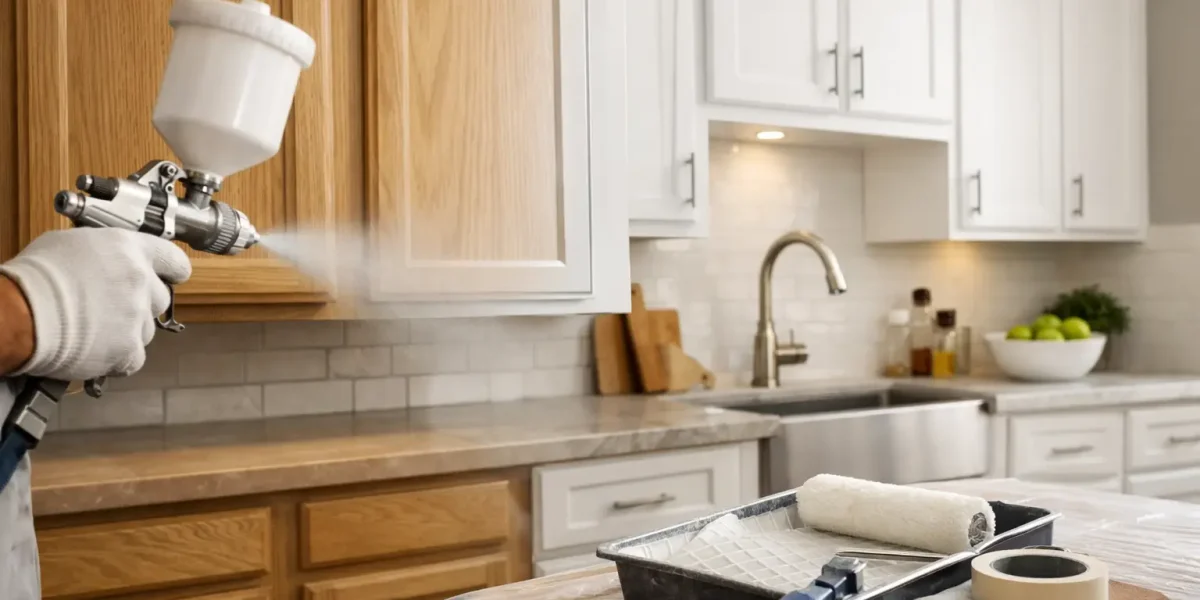
Professional spray application often creates the smoothest, most furniture-like finish on doors and drawer fronts. However, spraying requires careful containment, ventilation planning, and protection of surrounding surfaces. In some occupied homes or smaller project areas, a combination of spray and hand application may be the most practical approach. The right method is the one that delivers a consistent finish while protecting the home and project schedule.
Color Choices That Hold Up Over Time
White cabinets remain popular because they reflect light and make kitchens feel open. Warm whites, creamy neutrals, soft greige, muted sage, deep navy, and charcoal also work well in Phoenix homes, depending on the lighting, countertops, and overall style. The best cabinet color is not simply the latest trend. It should complement fixed elements that are expensive to change, such as tile, stone, flooring, and appliance finishes.
Before committing to a color, look at samples in the actual kitchen during morning, afternoon, and evening light. Arizona sunlight can make a cool white appear brighter or harsher than expected, while a warm color may read differently under interior lighting. If the kitchen connects to a family room or great room, consider how the cabinet color relates to nearby wall colors, trim, and furniture.
Two-tone cabinetry can be a strong choice when used with purpose. For example, a darker island paired with lighter perimeter cabinets can add contrast without making the room feel closed in. It works best when the colors connect to another element in the space, such as hardware, lighting, or countertops.
Planning for the Project in a Working Home
Cabinet painting is less disruptive than cabinet replacement, but it still requires planning. Homeowners should expect temporary limits on kitchen use, particularly while doors and drawer fronts are removed, coatings are applied, and finishes cure. The exact timeline depends on the size and condition of the kitchen, the number of doors and drawers, repairs required, coating specifications, and drying conditions.
A dependable contractor will explain the work sequence, arrival times, access needs, and what should be removed from cabinets and countertops before the project starts. Clear communication helps homeowners plan meals, protect valuables, and avoid surprises. For property managers and commercial clients, the same principle applies: project scheduling should account for tenant access, business hours, customer traffic, and required turnaround times.
Dry-to-the-touch is not the same as fully cured. Newly refinished cabinets need respectful use during the initial curing period. Avoid aggressive cleaning, hanging wet towels over doors, or slamming drawers until the coating has had adequate time to harden. Once cured, routine cleaning with a soft cloth and mild cleaner is usually enough. Abrasive pads and harsh chemicals can dull even a high-quality finish.
Questions Worth Asking Before You Hire
Before selecting a cabinet painter, ask how surfaces will be cleaned and prepared, whether doors and drawer fronts will be removed, what primer and finish system will be used, and how the work area will be protected. It is also reasonable to ask how repairs, hardware changes, touch-ups, cleanup, and final walkthroughs are handled.
Price matters, but the lowest estimate can leave out the labor-intensive steps that make cabinet refinishing last. Detailed prep, masking, dust control, quality coatings, and return visits for reassembly take time. A clear estimate should help you understand what is included rather than leave the most important details to assumption.
Right Choice Painting, LLC approaches cabinet refinishing with the same focus on craftsmanship, dependable scheduling, and careful cleanup that homeowners and businesses expect from an experienced local painting contractor. The goal is a finish that looks polished from across the room and holds up when life happens in the kitchen.
A well-planned cabinet update can change how a home feels every day without changing its footprint. Start by looking closely at the condition of your cabinets, the colors already in the room, and the level of durability your household needs. That simple evaluation will point you toward a finish that feels fresh now and still looks like the right choice years from now.