
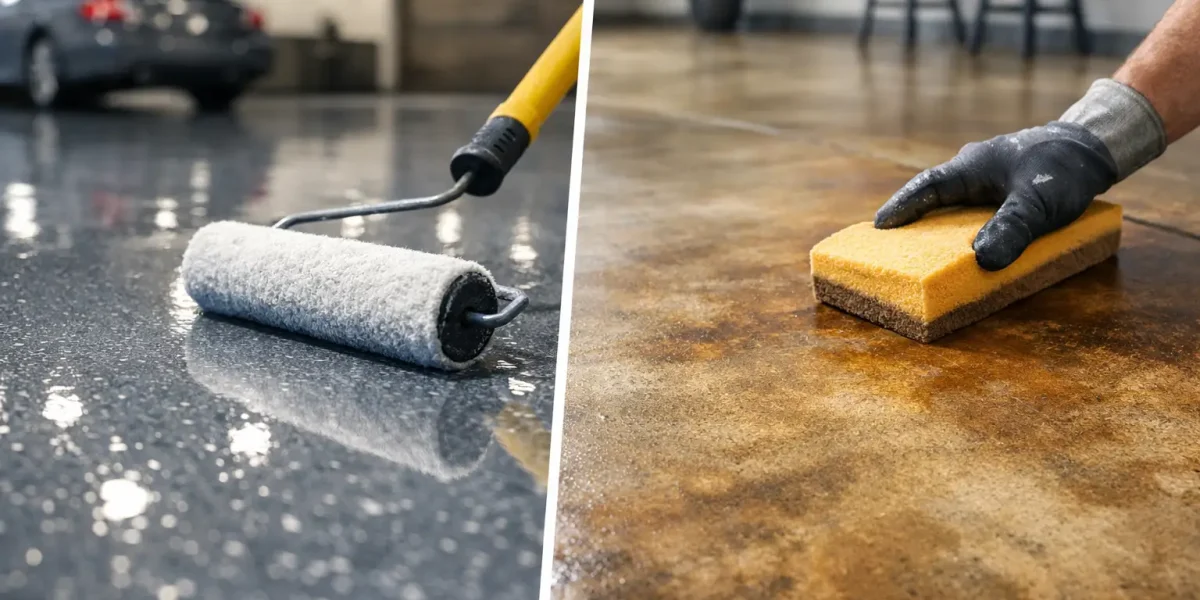
A garage floor can look worn out long before the rest of the home does. Oil spots, tire marks, faded concrete, and years of dust can make an otherwise well-kept property feel unfinished. When comparing epoxy flooring vs concrete stain, the better choice comes down to how you use the space, the condition of the slab, and the look you want to maintain in the Phoenix climate.
Both options improve plain concrete, but they do it in very different ways. Epoxy creates a protective coating over the slab. Concrete stain penetrates the concrete and changes its color while preserving a more natural, mineral-like appearance. A professional evaluation helps ensure the finish matches the surface and the demands of the space.
Epoxy Flooring vs Concrete Stain: The Core Difference
Epoxy flooring is a multi-layer coating system that bonds to properly prepared concrete. It creates a finished surface that can range from a clean solid color to decorative flake, metallic, or quartz-style finishes. In garages, workshops, commercial back rooms, showrooms, and high-traffic interior spaces, epoxy is often chosen for its polished appearance and protection against spills and abrasion.
Concrete stain works differently. Rather than forming a thick film on top of the slab, it reacts with or penetrates the concrete. The final color is influenced by the concrete itself, including its age, porosity, previous repairs, and natural variations. This gives stained concrete character that cannot be duplicated exactly from one floor to the next.
Neither finish is automatically better. A homeowner who wants a bright, easy-to-clean garage may prefer epoxy. A property owner who wants a low-sheen, earthy finish for an interior room, covered patio, or decorative walkway may find concrete stain more fitting.
Where Epoxy Flooring Performs Best
Epoxy is built for spaces where concrete takes a beating. A properly installed system helps protect the slab from vehicle fluids, dirt, dropped tools, foot traffic, and routine cleaning. Its nonporous surface also makes it easier to sweep and wipe down than bare or stained concrete.
For Phoenix-area garages, epoxy is a popular upgrade because it gives the room a finished, intentional appearance. Decorative flake systems are especially practical: they add visual texture, help hide dust and small debris, and create a more forgiving look than a single solid color. They also complement homes where the garage doubles as a workshop, home gym, storage area, or entry point for the family.
Commercial properties can benefit from epoxy in service corridors, storage rooms, retail back areas, offices, and facilities where cleanliness matters. The right system can be selected for the level of traffic, chemical exposure, and desired appearance. For a business, that means the floor can support a more professional environment without sacrificing practical performance.
Epoxy does require disciplined preparation. The concrete must be clean, dry, mechanically profiled, and free of coatings or contaminants that could interfere with adhesion. Moisture issues, major cracks, and weak concrete need to be addressed before coating begins. This prep work is not an optional extra. It is a major reason professionally installed epoxy systems last longer and look better.
Epoxy considerations in Arizona
Heat matters when coating concrete in the Valley. High temperatures can affect product working time and curing conditions, while hot tires and intense sun can be hard on certain finishes. Garages are generally a strong fit for epoxy, but exterior areas require product choices designed for UV exposure. Standard epoxy can amber or fade in direct sunlight, which is why exterior coatings often need a UV-stable topcoat or a different coating system altogether.
Where Concrete Stain Makes Sense
Concrete stain is an excellent choice when the goal is to enhance concrete rather than cover it completely. It can create warm earth tones, rich brown shades, soft grays, and variegated color effects that feel more natural than a coated floor. Because the color becomes part of the slab rather than sitting as a thick layer above it, stained concrete retains a distinctive, understated texture.
This finish works well in interior living areas with exposed concrete, covered patios, entryways, decorative retail spaces, and certain pool-deck or outdoor applications when paired with the correct protective sealer. It can be a smart option for homeowners who want something more refined than plain gray concrete but less glossy or uniform than epoxy.
The condition of the slab is especially important with stain. Old glue, paint, sealers, patchwork, oil spots, and inconsistent repairs can all affect color absorption. Sometimes that variation adds character. Other times, it creates results that are too uneven for the homeowner’s expectations. A test area is often the best way to understand how a particular slab will accept stain.
Concrete stain also needs protection. A quality sealer helps reduce staining and makes routine cleaning easier, but it does not turn stained concrete into a heavy-duty industrial coating. In a busy garage where oil leaks, tire traffic, and tool use are common, stain may show wear sooner than epoxy.
Comparing Durability, Maintenance, and Appearance
Durability is usually the deciding factor for functional spaces. Epoxy generally offers better resistance to automotive fluids, abrasion, and repeated cleaning than stained concrete. It is designed to be a working surface, not simply a color treatment. When installed over sound, well-prepared concrete, it can provide years of reliable service.
Concrete stain is durable in a different way. Since it penetrates the slab, it will not peel like a failed surface coating. However, the sealer above it can wear down, especially in high-traffic areas or locations exposed to sun and weather. Periodic resealing may be needed to preserve the appearance and protection.
Maintenance for both finishes is manageable. Epoxy floors benefit from regular sweeping and prompt cleanup of spills. Mild cleaning solutions are typically enough for routine care. Stained concrete should also be swept and cleaned gently, with attention to the condition of the sealer. Harsh cleaners and neglected spills can dull or damage the protective finish.
Appearance is more personal. Epoxy offers a controlled, consistent result. It can look sleek, bright, decorative, or commercial-grade depending on the system selected. Concrete stain is more organic and variable, with color movement that reflects the slab beneath it. If you want predictability, epoxy usually has the advantage. If you appreciate one-of-a-kind variation, stain is often more appealing.
Cost Is About More Than the Initial Price
It is tempting to compare only the price per square foot, but the installation process affects long-term value. Epoxy may cost more upfront because it requires extensive surface preparation, crack repair, primers, base coats, decorative materials, and protective topcoats. That investment often makes sense in garages and commercial areas where the floor needs to perform under daily use.
Concrete stain can be less expensive in situations where the slab is clean, sound, and ready to accept color. But difficult slabs may need grinding, stain removal, repairs, or other corrective work before staining can produce a satisfactory result. A lower initial estimate is only a value if the finished floor meets expectations and holds up appropriately.
For either option, be cautious about quick cosmetic fixes. Coating over contaminated concrete or applying stain over an existing sealer can lead to disappointing results. Thorough prep, clear product selection, and a final quality inspection are what protect the investment.
How to Choose the Right Finish for Your Space
Start with the way the space functions. Choose epoxy when you need a hard-working, easy-to-clean surface for a garage, workshop, commercial room, or high-use interior floor. It is also the stronger choice when you want decorative flakes, a uniform color, or a noticeably upgraded showroom-style finish.
Choose concrete stain when you want to preserve the character of the concrete and create a more natural, low-profile look. It can be especially attractive for interior concrete, covered outdoor spaces, and decorative areas where heavy chemical resistance is not the primary concern.
The existing slab should have a voice in the decision as well. Cracks, moisture, prior coatings, and surface contamination can change what is practical. An experienced contractor can inspect the concrete, explain the prep needed, and recommend a system that fits the location rather than pushing a one-size-fits-all solution.
Right Choice Painting helps homeowners, property managers, and business owners across the Phoenix metro area choose finishes that look polished and perform as promised. The best floor is not simply the one with the boldest color or lowest starting price. It is the one prepared correctly for the life that happens on top of it.