
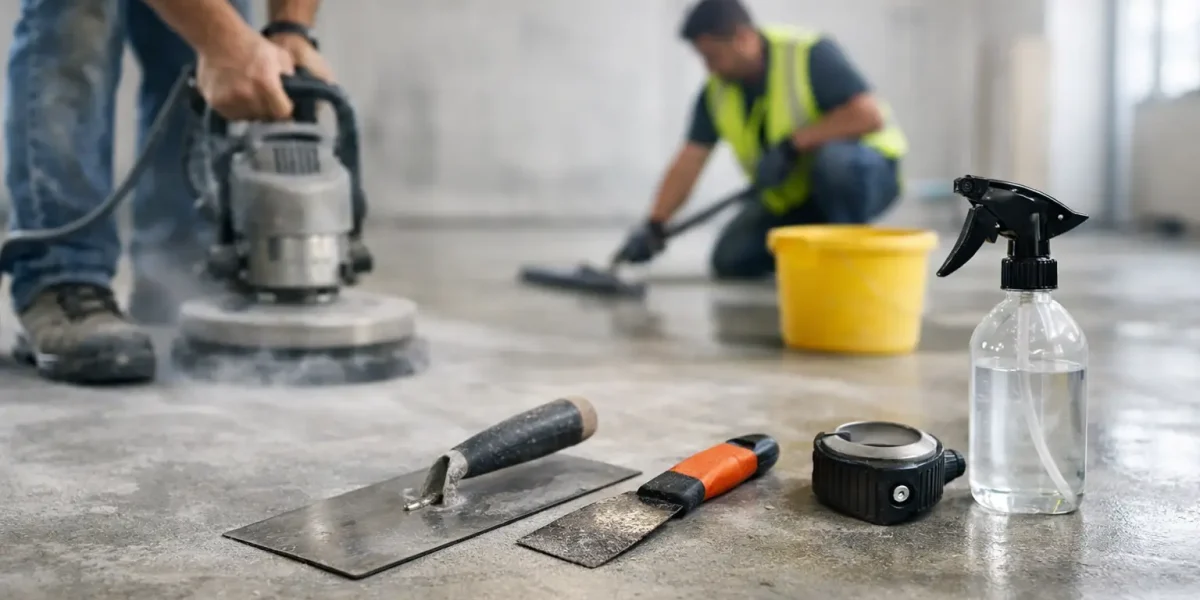
A coating is only as good as the surface under it. When concrete coating jobs fail in Phoenix garages, patios, pool decks, and commercial spaces, the problem usually starts long before the first coat goes down. If you want to know how to prep concrete for coating, the short answer is this: clean it completely, repair what needs repair, test for moisture, and create the right surface profile for the product being applied.
That sounds simple, but concrete has a way of hiding problems. Dust, curing compounds, old sealers, oil stains, and hairline cracks can all interfere with adhesion. Add in Arizona heat and the wear that comes from vehicles, foot traffic, or pool chemicals, and prep becomes the part of the project that matters most.
Why concrete prep matters so much
Concrete may look solid and uniform, but it is porous and inconsistent from slab to slab. Some surfaces are smooth and dense. Others are worn, dusty, stained, or patched in multiple areas. A coating has to bond to that exact condition, not the ideal version of it.
When prep is rushed, coatings can peel, blister, bubble, or wear unevenly. That is frustrating for a homeowner and costly for a property manager or business owner. Proper prep gives the coating a clean, stable surface to grab onto, which is what creates a finish that looks better and lasts longer.
How to prep concrete for coating step by step
The best approach depends on the slab, the coating system, and how the space will be used. A garage floor has different demands than a pool deck, and an interior commercial floor has different moisture concerns than an outdoor patio. Even so, the prep process usually follows the same sequence.
Start with a full surface inspection
Before cleaning or grinding begins, inspect the slab closely. Look for oil and grease spots, tire marks, efflorescence, paint overspray, flaking concrete, spalling, pitting, and previous coatings or sealers. Cracks matter too, but not all cracks mean the same thing. A stable hairline crack can often be repaired and coated. An active structural crack may need a different solution.
This first inspection helps determine whether the concrete is actually ready for a coating system or whether repairs and extra prep will drive the project. It also helps match the right coating to the surface condition instead of forcing a product onto a slab that is not prepared to accept it.
Remove dirt, dust, and contaminants
A basic sweep is not enough. Concrete collects fine dust that settles into the pores, and coatings do not bond well through that layer. The surface needs to be thoroughly cleaned so contaminants are removed, not just pushed around.
Oil and grease deserve special attention. If those stains are left in place, they can bleed through or weaken adhesion. In garages and service areas, a degreasing process is often necessary before mechanical prep begins. On exterior surfaces, mildew, dirt buildup, and residue from landscaping or pool use can also interfere with the bond.
One detail many people miss is old sealers. Concrete can look bare but still have a clear sealer or curing compound on it. If water beads up on the surface instead of soaking in, that is a warning sign that something is still there and must be removed.
Repair cracks and damaged areas
Coatings are not a fix for failing concrete. They are a finish system that performs best when the slab underneath is sound. Cracks, chips, pop-outs, and low spots should be evaluated before the coating phase starts.
Some repairs are straightforward. Small pits and surface imperfections can often be filled and leveled. Wider cracks usually need a crack repair material that can be ground smooth after it cures. If the slab has major movement, moisture issues, or areas that are breaking apart, those conditions should be addressed first. Otherwise, the new coating may mirror those failures sooner than expected.
This is one of those areas where it depends. A decorative coating can hide minor cosmetic flaws, but it will not stop structural movement. Being honest about the condition of the slab is part of getting a durable result.
Test for moisture before coating
Moisture is one of the biggest reasons concrete coatings fail. Even in a dry climate like Phoenix, concrete can hold moisture vapor below the surface. Interior slabs, older garages, shaded areas, and some commercial buildings are especially prone to this issue.
If moisture is pushing up through the slab, coatings can blister or lose bond over time. That is why moisture testing matters, especially for epoxy and other high-build systems. A surface can look dry and still have vapor issues underneath.
The right test method depends on the project, but the goal is the same: confirm that the slab conditions are compatible with the coating system being used. Skipping this step can turn a good-looking install into a short-lived one.
Creating the right profile for coating adhesion
Once the slab is clean and repaired, it usually needs mechanical profiling. This is the part of prep that gives the coating something to bite into. For most professional applications, grinding or shot blasting is preferred over acid etching because it is more consistent and gives better control over the surface.
Grinding vs. acid etching
Grinding is the standard for many coating projects because it removes weak surface material, opens the pores, and creates an even texture. It also helps expose hidden issues such as patched areas, lingering coatings, or soft concrete that would otherwise stay buried until the finish begins to fail.
Acid etching is sometimes mentioned as a prep option, but it has limits. It may not remove sealers, grease, or old coatings effectively, and it can leave behind residue if it is not neutralized and rinsed properly. On some jobs, it simply does not provide the profile needed for a long-term bond. That is why mechanical prep is usually the more dependable choice.
Match the profile to the coating
Not every coating requires the same level of texture. Thin coatings and stains may need a lighter profile, while thicker epoxy or polyaspartic systems often require a more defined surface. Over-profiling can be just as problematic as under-prepping because it affects coverage and finish appearance.
This is where experience matters. The prep should fit the product, the slab, and the performance expectations of the space. A garage floor that sees hot tires and heavy use needs a different approach than a decorative patio coating designed more for appearance and slip resistance.
Conditions that can affect the job
Surface prep is not just about the slab. Environmental conditions also influence how well a coating performs. In Arizona, heat can speed up product cure times and narrow the installation window. Exterior surfaces may be too hot during parts of the day, and dust can become an issue if the area is not well controlled.
Interior commercial spaces bring their own challenges. Scheduling may need to work around business hours, and prep has to be done cleanly and efficiently to keep disruption low. In occupied homes, proper containment and cleanup matter just as much as technical prep because the customer experience matters too.
Common mistakes when prepping concrete for coating
The most common mistake is assuming the slab is cleaner than it is. A floor can look ready and still have contaminants deep in the pores. Another frequent problem is coating over previous sealers or failing concrete without recognizing it during inspection.
Moisture issues are also easy to underestimate. So is crack movement. And then there is the temptation to rush. Coating projects often look like finish work, but they succeed or fail during prep. When the early steps are skipped, the surface may look good at first and then start peeling where tires turn, water sits, or sun exposure is strongest.
When professional prep makes the difference
For small, low-demand areas, some property owners try to handle prep on their own. The challenge is that professional prep is not just about effort. It is about diagnosing the slab correctly, using the right equipment, and matching the preparation to the coating system.
That is especially true for garages, pool decks, commercial floors, and any space where appearance and durability both matter. A trained crew can identify hidden bond-breakers, repair the slab properly, and create a profile that supports long-term performance. That is the standard companies like Right Choice Painting aim for because a coating should not just look finished on day one. It should keep performing after daily use, weather exposure, and routine cleaning.
If you are planning a concrete coating project, treat prep as the real foundation of the job. The better the slab is prepared, the better the finish will hold up when life starts happening on it.