
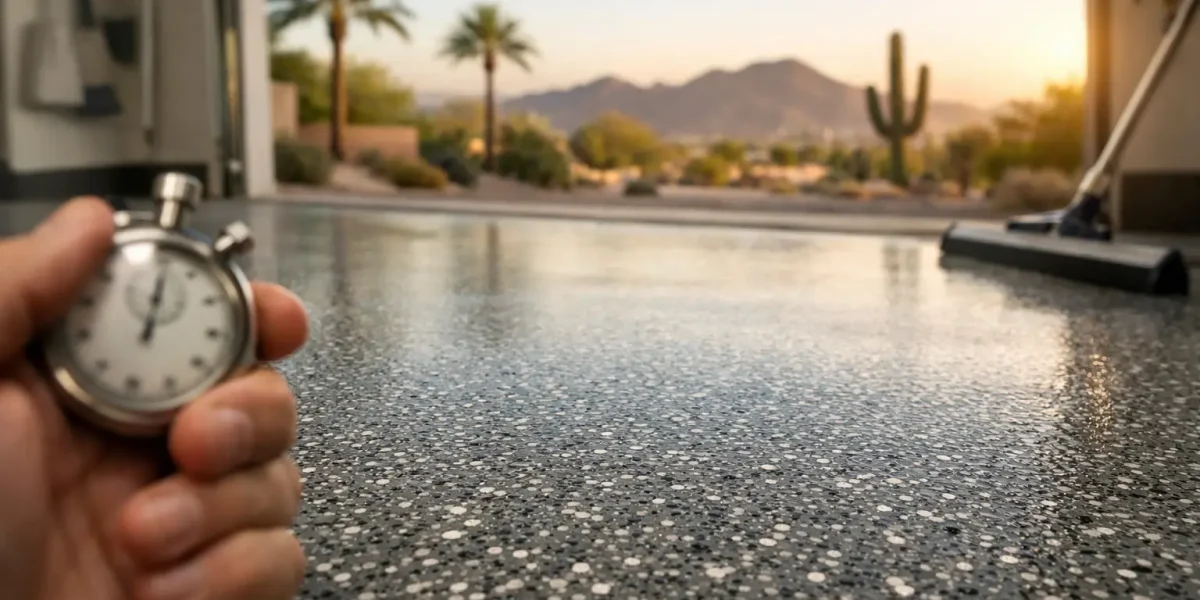
A newly coated garage floor can look dry by the next morning, but that does not mean it is ready for vehicles, tool cabinets, hot tires, or heavy traffic. So, how long does epoxy flooring cure? For many professional epoxy systems, light foot traffic is possible in 12 to 24 hours, while vehicle traffic often requires three to seven days. The exact answer depends on the coating system, the concrete, the temperature, and how the floor will be used.
For Phoenix-area homeowners and property managers, cure time deserves special attention. Desert heat can make a coating feel dry quickly, yet excessive heat or direct sun can interfere with proper application and leave a finish that is less durable than it should be. A quality epoxy floor is not only about choosing a good product. It is about giving that product the right conditions to bond and harden.
How Long Does Epoxy Flooring Cure Before Use?
Epoxy cures through a chemical reaction between resin and hardener. It does not simply dry as paint does. Once the components are mixed, the reaction begins, and the coating gradually develops its hardness, chemical resistance, and bond to the prepared concrete.
Most epoxy flooring projects move through several practical stages. The floor may become tack-free within roughly 8 to 16 hours. At that point, dust is less likely to stick to it, but it should not be walked on unless the product instructions allow it. Light foot traffic is commonly safe after 12 to 24 hours. For a residential garage, waiting at least 48 to 72 hours before moving in light items is often wise, while cars should usually stay off the surface for three to seven days.
Full cure can take about seven days, and some high-build or specialty systems take longer. During that period, the floor continues gaining strength even if it looks finished. A professional installer will provide a clear return-to-service schedule based on the specific coating used, rather than relying on a one-size-fits-all promise.
A practical return-to-service timeline
A typical professionally installed epoxy floor may follow this schedule:
- 0 to 12 hours: Keep all traffic off the floor. Do not touch or test the coating.
- 12 to 24 hours: Light foot traffic may be allowed if the system has reached a safe stage.
- 24 to 72 hours: The floor can often handle careful use, but avoid dragging equipment, placing heavy storage on it, or exposing it to water and chemicals.
- 3 to 7 days: Most garage floors are ready for vehicles, subject to the product specifications and site conditions.
- About 7 days: The coating is generally fully cured and ready for normal heavy use, cleaning, and chemical exposure.
These are planning ranges, not substitutes for the coating manufacturer’s requirements. Fast-curing polyaspartic systems, for example, can return a floor to service much sooner than standard epoxy. Conversely, a cool, damp, or poorly ventilated space can extend the timeline.
Why Phoenix Weather Can Change Epoxy Cure Time
Phoenix heat is a factor before, during, and after installation. Warm temperatures can speed up the chemical reaction, shortening the coating’s working time. That may sound helpful, but faster is not automatically better. If epoxy cures too quickly during application, it can be harder to spread evenly, maintain a wet edge, and achieve a consistent decorative finish.
The surface temperature of the concrete matters more than the air temperature alone. A garage slab exposed to afternoon sun can be far hotter than the temperature shown on a thermostat. Applying epoxy to overheated concrete can lead to bubbling, uneven texture, or reduced adhesion. Experienced installers plan around the slab temperature, shade conditions, humidity, and the coating’s approved application range.
Cooler weather creates the opposite challenge. When temperatures fall below the system’s recommended range, epoxy may remain soft longer, take extra time to cure, or fail to reach its intended performance level. This is one reason professional scheduling and product selection matter for both homes and commercial facilities. The goal is not just to complete the installation on a particular day. It is to deliver a floor that holds up under real use.
Cure Time Depends on More Than the Coating
The product is only one part of the equation. Concrete preparation has a major effect on whether an epoxy floor cures and performs as expected. Epoxy needs a clean, sound, properly profiled surface to form a lasting mechanical bond. Oil residue, old sealers, moisture vapor, dust, and weak concrete can all create problems that appear later as peeling, blistering, or hot-tire pickup.
A professional crew typically evaluates the slab before coating begins. Cracks may need repair, concrete may need grinding or mechanical preparation, and moisture conditions should be considered before the first coat is applied. Skipping those steps can make a project seem faster, but it often creates an expensive repair down the road.
Coating thickness also affects cure time. A thin roll-on epoxy may harden faster than a thicker, multi-coat system with a decorative flake broadcast and a protective clear topcoat. The more layers involved, the more carefully each coat must be timed. Recoating too early can trap solvents or disturb the previous layer. Waiting too long can reduce intercoat adhesion unless the surface is properly prepared again.
When Can You Park on a New Epoxy Garage Floor?
For most homeowners, this is the question that matters most. The safe answer is: park only when the installer confirms the floor is ready for vehicle traffic. Many epoxy garage floors need at least three days, and a full week is the safer range for standard systems.
Avoid driving onto the floor early just because it no longer feels sticky. Vehicle weight concentrates pressure through the tires, and warm tires can place additional stress on a coating that has not fully hardened. Parking too soon can leave marks, reduce gloss, or weaken the finish before it has reached its designed strength.
If your schedule is tight, discuss it before the project starts. A faster-curing coating system may be appropriate for some garages, retail spaces, workshops, or commercial facilities. The trade-off is that fast-curing materials require precise installation because the crew has less time to work with the product. The right choice depends on the floor’s condition, expected traffic, desired appearance, and required turnaround time.
How to Protect the Floor During the Cure Period
The first few days set the tone for the life of the coating. Keep doors closed when possible to limit windblown dust, leaves, and debris. Do not wash the floor, place rubber mats on it, or drag boxes and storage racks across it. If a contractor has installed a flake floor with a clear topcoat, do not judge its final sheen until the recommended cure period has passed.
For commercial properties, cure planning should be part of the project schedule. A restaurant back room, showroom, warehouse aisle, or hotel service area may need phased work so operations can continue with minimal disruption. Clear communication about access, foot traffic, equipment movement, and reopening dates prevents rushed decisions that could compromise the finished surface.
Once the floor is fully cured, regular care is straightforward. Sweep away abrasive dirt, clean spills promptly, and use cleaning methods appropriate for the coating. Epoxy is durable, but no floor finish is indestructible. Sharp impacts, harsh chemicals left sitting for long periods, and heavy equipment dragged across the surface can still cause damage.
Plan for Performance, Not Just a Fast Finish
A beautiful epoxy floor should be ready when it is truly ready, not when it merely looks dry. The difference between a one-day inconvenience and a long-lasting finish often comes down to proper concrete preparation, the right coating system, and a cure schedule that respects the conditions on site.
For garages, patios, workshops, and commercial spaces across the Phoenix metro area, Right Choice Painting helps clients make informed decisions about coating options, timing, and long-term care. A clear plan before installation gives your new floor the time it needs to deliver the polished, durable result you expect.