
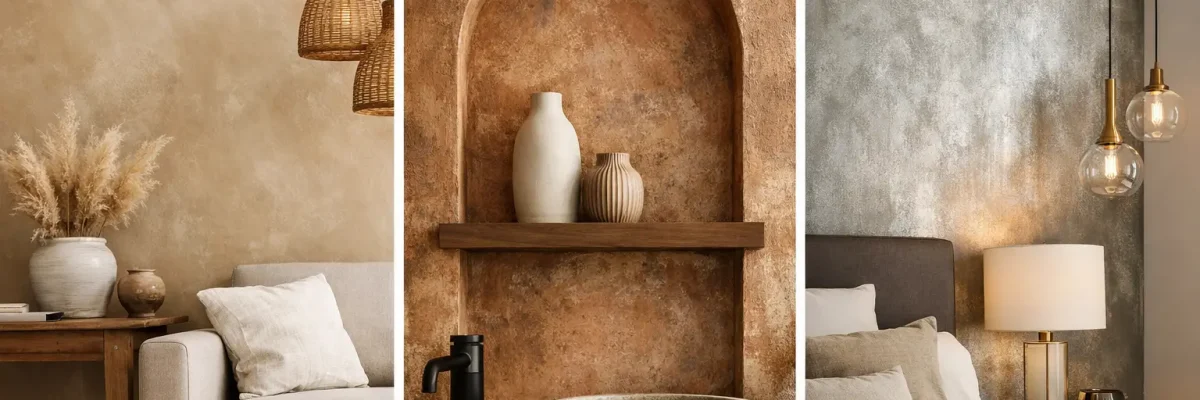
A wall does not need to be bright red to become the focal point of a room. Often, the most memorable spaces use quiet movement, soft texture, or a subtle reflective quality that changes as daylight moves across the surface. Specialty wall finishes Phoenix homeowners and business owners choose can create that effect while giving a space a more considered, custom appearance.
For a desert-area home, a Scottsdale office, or a hospitality property serving guests every day, the right finish should do more than look good in a sample. It needs to suit the room’s lighting, traffic level, existing materials, and maintenance expectations. That is where professional product selection, surface preparation, and application technique make the difference.
What Makes a Wall Finish “Specialty”?
A standard interior paint job is designed to provide even color and dependable coverage. A specialty finish adds another visual or tactile dimension. It may create depth through layered color, movement through hand-applied texture, or a mineral appearance that feels at home alongside stone, wood, tile, and natural fabrics.
These finishes are not one-size-fits-all. Some are meant to look refined from a few feet away, while others make a stronger statement. A fine Venetian plaster finish can bring a polished, dimensional look to a dining room or reception area. Limewash can create a soft, cloud-like variation that works well in warm, organic interiors. Decorative glazing, metallic finishes, and textured coatings can add character to accent walls, entryways, retail spaces, and feature areas.
The best choice depends on the desired effect. A finish that looks dramatic in a large showroom may feel overwhelming on every wall of a smaller bedroom. Conversely, a low-contrast texture may be exactly what a space needs when the goal is warmth without visual clutter.
Specialty Wall Finishes Phoenix Property Owners Can Consider
Phoenix architecture offers plenty of room for finish options. Clean-lined contemporary homes, desert modern interiors, Southwestern details, and updated commercial spaces can all benefit from surface treatments that add dimension without competing with the rest of the design.
Venetian plaster and polished plaster
Venetian plaster is valued for its depth, smoothness, and hand-crafted appearance. Depending on the material and technique, it can range from softly matte to gently polished. It is a strong fit for formal living areas, primary bedrooms, feature walls, luxury retail environments, and lobbies.
The trade-off is that plaster finishes require a highly prepared surface and an experienced hand. Existing dents, drywall seams, and uneven patches can show through a refined finish. When applied correctly, however, the result has visual variation that flat paint cannot duplicate.
Limewash and mineral-style finishes
Limewash and similar mineral-inspired finishes create subtle tonal movement. They are especially popular where homeowners want an earthy, relaxed look instead of a perfectly uniform painted surface. Warm whites, sand tones, muted greens, clay colors, and soft grays work naturally with Phoenix light and desert-influenced design.
This style is intentionally variable. Clients who want every wall to look identical may be happier with conventional paint. Those who appreciate a finish with character often find that the gentle variation is the entire appeal.
Textured finishes
Textured wall finishes can range from fine, understated patterns to more pronounced handcrafted effects. They can help an accent wall stand apart, bring life to an otherwise plain hallway, or complement stone fireplaces and wood beams. In commercial settings, texture can make a reception area or feature wall feel more finished and brand-forward.
Texture also has practical considerations. Heavy texture can collect dust and may be harder to repair invisibly after damage. Fine texture is often easier to live with while still providing a custom appearance. The appropriate level depends on the room and how the property is used.
Metallic and decorative finishes
Metallic finishes can introduce a controlled sheen that catches light without turning a wall into a mirror. They are often used in powder rooms, dining spaces, salons, restaurants, and hospitality settings where the goal is a distinct visual moment.
Because metallic products respond strongly to light, viewing samples in the actual room matters. A color may look warm during the day and cooler under recessed lighting at night. Testing the finish near windows, lamps, and permanent fixtures helps avoid surprises after application.
Start With the Room, Not the Trend
A finish should support how a space functions. A low-traffic formal room has different needs than a busy family entry, a restaurant corridor, or a rental property turnover unit. Before selecting a specialty finish, consider how often the wall will be touched, cleaned, bumped by furniture, or exposed to moisture.
For example, a powder room may be a good place for a bolder decorative application because it is a smaller space where guests expect a little personality. A child’s bedroom or heavily used hallway may call for a more durable, repair-friendly finish. In offices and hotels, the choice often comes down to balancing visual impact with an efficient maintenance plan.
Lighting deserves equal attention. Phoenix receives abundant natural light, and that light can reveal every bit of color variation, texture, and wall imperfection. A finish that appears soft in a shaded room can look much more active on a sunlit wall. Reviewing samples at different times of day is one of the simplest ways to make a confident decision.
Preparation Determines the Final Result
Specialty finishes do not hide poor preparation. In many cases, they make flaws more visible. Walls may need patching, sanding, caulking, priming, or skim coating before the decorative work begins. Previous wallpaper adhesive, glossy paint, water staining, and damaged drywall all need to be addressed correctly.
This is also why application steps should not be rushed. Some finishes require multiple coats, controlled drying times, hand troweling, burnishing, glazing, or protective topcoats. Skipping steps can affect color consistency, adhesion, durability, and the final visual effect.
At Right Choice Painting, LLC, the process starts with evaluating the existing surface and the client’s goals before recommending an approach. That preparation-focused mindset helps keep the finished wall aligned with the sample, the schedule, and the level of quality the project deserves.
How Phoenix Conditions Affect Interior Finish Choices
Although interior walls are protected from direct sun and monsoon weather, the Phoenix climate still affects homes and buildings. Dry air, seasonal temperature swings, dust, and HVAC use can influence indoor comfort and surface conditions. Exterior heat can also intensify natural light, making sheen and texture more noticeable inside.
For interiors, properly conditioned materials and clean, stable wall surfaces help specialty coatings perform as intended. In rooms with high moisture, such as bathrooms, the finish and any protective coating should be chosen with that environment in mind. Not every decorative treatment is the right fit near showers, sinks, or frequently cleaned surfaces.
For commercial projects, timing matters as much as product selection. Occupied offices, hotels, restaurants, and retail locations may require phased work, evening scheduling, or careful containment to limit disruption. A dependable contractor should discuss access, drying time, cleanup, and protection of nearby furnishings before work begins.
Samples Are Worth the Extra Step
Digital inspiration photos are useful, but they cannot fully show the effect of a hand-applied finish in your own space. A sample board or test area gives you the chance to see the real color, depth, texture, and sheen against your flooring, cabinets, trim, and lighting.
When comparing samples, look at them from multiple angles and distances. Stand close enough to see the technique, then step back to see how the finish reads across the room. Ask whether the effect supports the furniture and architectural details already in place. A specialty finish should feel intentional, not like an afterthought.
It also helps to decide whether the finish belongs on one focal wall or throughout the room. A single fireplace wall, dining wall, entry niche, or reception backdrop can deliver a strong result without overcommitting the entire space. Full-room applications can be beautiful too, particularly with soft limewash or subtle plaster, but they require a cohesive plan.
Choose Craftsmanship Over Shortcuts
Decorative wall work is part material science and part technique. The same product can look completely different based on the condition of the wall, the tools used, coat thickness, timing, and the installer’s consistency. The lowest estimate is not always the best value if it leaves out necessary prep, samples, protection, or final inspection.
Ask clear questions before the project begins: What repairs are included? Will the finish vary naturally? How will surrounding surfaces be protected? What maintenance does the finish require? A detailed scope gives homeowners, property managers, and business owners a clearer picture of the expected result.
A well-chosen specialty finish gives a room a sense of depth that ordinary paint alone cannot provide. Start with the way the space is used, view real samples in its actual light, and choose a finish team that treats preparation and final detail with the same care as the decorative surface itself.