
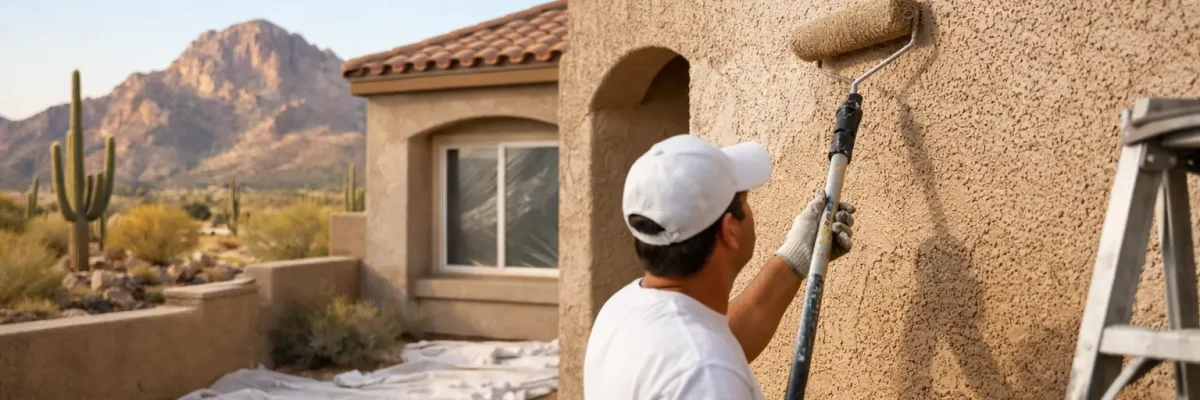
Fresh exterior paint can make a stucco home look newer overnight, but in Phoenix, good looks are only part of the job. Stucco painting has to stand up to intense sun, dry heat, dust, monsoon moisture, and the natural movement that comes with masonry surfaces. If the prep is rushed or the wrong coating goes on, the finish may fade early, crack, or peel long before it should.
That is why stucco should never be treated like standard siding. It is porous, textured, and often already carrying hairline cracks, patched areas, or uneven paint from previous work. A professional result depends on reading the surface correctly, preparing it thoroughly, and choosing products that perform well in Arizona conditions.
Why stucco painting needs a different approach
Stucco has a lot going for it in the Southwest. It is durable, attractive, and common across homes and commercial properties throughout Maricopa County. But it also behaves differently than wood, fiber cement, or drywall. It absorbs moisture differently, expands and contracts with temperature shifts, and its texture can hide problems until paint starts failing.
A smooth wall gives painters immediate feedback. Stucco does not. Small cracks, chalky residue, and old patch repairs can disappear into the finish until they cause uneven color or poor adhesion. That is one reason exterior stucco painting is as much about surface correction as it is about color.
The age of the stucco matters too. New stucco needs time to cure before it can be coated properly. Older stucco may need cleaning, repairs, and a masonry-specific primer before paint is even an option. If a property has been painted before, the condition of that existing coating has to be evaluated first. Painting over unstable paint rarely saves time or money.
What to check before painting stucco
Before any paint is opened, the wall should be inspected with a practical eye. Not every crack is a major structural concern, but not every crack is cosmetic either. Hairline cracking is common in stucco. Larger cracks, soft spots, water staining, or areas that sound hollow may point to a bigger issue that should be addressed before painting begins.
Chalking is another common problem in the Phoenix area. When you rub the surface and get a dusty residue on your hand, the old coating may be breaking down from UV exposure. Paint does not bond well to that powdery layer. The wall needs proper cleaning and, in many cases, priming to create a stable surface.
It is also smart to look at previous repairs. Patchwork can absorb paint differently from surrounding stucco, which leads to flashing or visible dull spots after the job is done. Skilled prep helps blend those areas so the final appearance is more uniform.
Prep work makes or breaks stucco painting
The best-looking stucco painting projects usually start with the least glamorous part of the process. Cleaning, patching, caulking, masking, and priming are what give the finish a real chance to last.
Stucco collects dust fast in the desert, and paint does not adhere well over dirt, chalk, or loose debris. A thorough wash clears the surface and reveals areas that need repair. Once the wall is clean and dry, cracks and damaged sections can be addressed with the right masonry-compatible materials.
This is where experience matters. Overfilling cracks or using the wrong patch can leave obvious smooth spots on a textured wall. Underprepping leaves weak points behind. A good painter works to preserve the visual consistency of the stucco while correcting what will affect performance.
Priming depends on the wall condition. Some previously painted stucco surfaces in solid shape may not need full priming. Others absolutely do, especially when there are repairs, raw masonry, heavy chalking, or major color changes involved. There is no one-size-fits-all answer, and that is exactly why the inspection stage matters.
Choosing the right paint for Arizona stucco
Not all exterior paints are built for stucco, and not all stucco coatings are right for every building. The goal is to use a high-quality product that can bond well, resist fading, and handle the movement and texture of the surface.
In the Phoenix market, sun resistance is a major factor. Strong UV exposure can punish low-grade paint, causing color loss and surface breakdown much earlier than expected. Breathability matters too. Stucco needs a coating that allows moisture vapor to escape while still protecting the surface from weather exposure.
Finish selection also plays a role. Most stucco exteriors are painted with flat or low-sheen finishes because they look more natural on textured masonry and help reduce the appearance of minor surface irregularities. Higher sheen products can highlight flaws and create an uneven visual effect on rough walls.
Color should be chosen with the environment in mind. Darker colors may look striking, but they can absorb more heat and show fading faster in direct sun. Lighter, earth-toned colors remain popular in Arizona for good reason. They fit the local style, reflect more heat, and tend to age more gracefully.
Timing matters more than many owners expect
In exterior painting, product and prep get most of the attention, but timing is just as important. Stucco should be painted when surface and air conditions support proper adhesion and curing. That means avoiding extreme heat, rain threats, or situations where the wall is too hot for the coating to behave as designed.
In Phoenix, early starts and careful scheduling are often part of doing the job right. South- and west-facing walls can heat up quickly, especially in warmer months. A skilled crew plans the sequence of work around sun exposure, daily temperatures, and dry times instead of trying to force the project through unfavorable conditions.
This is one of the biggest differences between a rushed paint job and a professional one. The wall may be ready, the color may be selected, but if the conditions are wrong, waiting is the better call.
Common problems after bad stucco painting
When stucco painting is done poorly, the signs usually show up faster than homeowners expect. Peeling around cracks, lap marks, uneven coverage on textured areas, and patchy color are all common issues. Sometimes the paint looks acceptable from the street but falls apart on closer inspection.
One frequent problem is thin coverage. Stucco texture creates peaks and valleys, and it takes the right application method and enough material to coat the entire surface evenly. If the product is stretched too far, the low spots may remain undercoated and wear down early.
Another issue is painting over unresolved damage. Paint can improve appearance, but it does not fix failing stucco. If water intrusion, unstable patches, or major cracking are ignored, the new finish will not perform the way it should.
Why professional stucco painting pays off
A professional contractor brings more than labor to the job. The real value is in knowing how to evaluate the surface, identify risks before coating begins, and match the prep and paint system to the property.
For homeowners, that means better curb appeal and fewer surprises after the project is complete. For property managers and business owners, it means cleaner scheduling, clearer communication, and a finish that supports the image of the property instead of creating a maintenance headache a year later.
At Right Choice Painting, LLC, that approach matters because stucco is one of the most visible exterior surfaces on Arizona properties. It deserves careful prep, dependable execution, and a final walkthrough that confirms the details were handled correctly.
How to know when it is time to repaint stucco
A full repaint is not only about obvious failure. Fading, chalking, worn areas around exposed elevations, and a tired overall appearance can all be signs that the coating has reached the end of its useful life. Even if the stucco itself is still sound, the paint may no longer be giving it the level of protection it needs.
If you are seeing small cracks multiply, noticing inconsistent color, or feeling uncertain about the condition of an older exterior, it is worth having the surface evaluated before problems spread. In many cases, addressing the issue at the right time is far more cost-effective than waiting until repairs become more extensive.
A well-painted stucco exterior should look sharp, hold color, and handle Arizona weather with confidence. When the surface is prepared properly and the work is done with care, the result is not just a fresh coat of paint. It is a longer-lasting exterior that feels maintained, protected, and ready for the years ahead.