
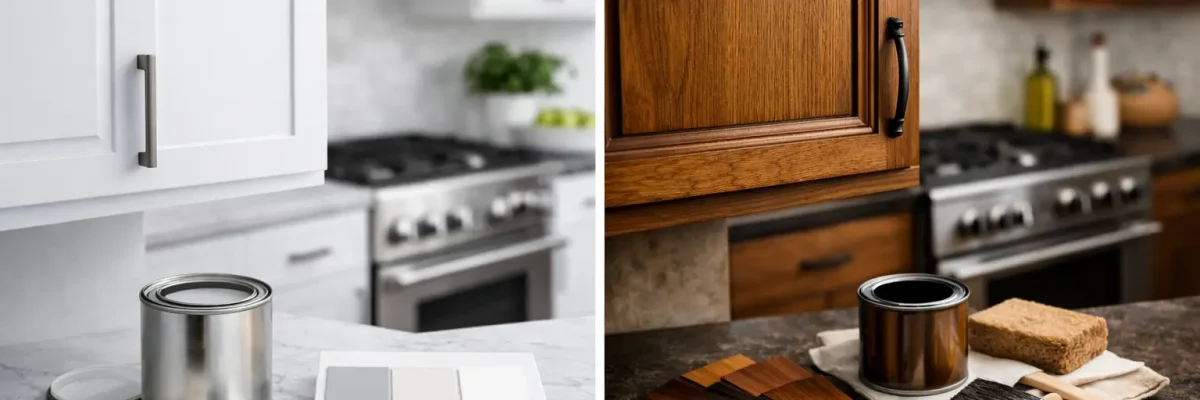
A kitchen can feel completely different without changing its layout. The finish on the cabinets sets the visual direction, affects how wear shows over time, and often determines whether the room feels current or dated. When homeowners compare painted cabinets vs stained cabinets, the right answer depends on the cabinet material, the home’s style, the condition of the existing doors, and how much maintenance they want to take on.
For Phoenix-area homes, sunlight also belongs in the conversation. Strong natural light can make white paint feel crisp and open, but it can also reveal imperfect surface prep. It can bring out the depth of a rich wood stain, while prolonged UV exposure near large windows may gradually alter certain finishes. A well-chosen, professionally applied cabinet finish should look good on day one and continue to hold up through real daily use.
The Visual Difference Between Painted and Stained Cabinets
Paint and stain do fundamentally different things. Paint covers the wood grain with an opaque color. Stain penetrates or colors the wood while allowing its grain, knots, and natural variation to remain visible.
Painted cabinets create a cleaner, more tailored look
Painted cabinets are a strong choice for homeowners who want a brighter, more updated kitchen or bathroom. White, warm off-white, greige, soft gray, navy, sage, and deep charcoal can all give cabinetry a deliberate, custom appearance. Paint is also the more flexible option when a room has mixed materials, such as dated oak cabinets, newer countertops, and modern tile.
Because paint creates a uniform color, it can make a kitchen feel more cohesive. It is especially useful when cabinet doors have inconsistent grain, minor color variation, or repairs that would be difficult to hide under stain. Painted finishes work particularly well in transitional, contemporary, coastal, and modern farmhouse interiors.
That polished look comes with one consideration: paint does not hide physical defects by itself. Dings, open joints, peeling previous coatings, and rough grain require careful repair and preparation before finish coats are applied. On cabinet work, the prep is what separates a finish that looks smooth and durable from one that begins showing problems too soon.
Stained cabinets bring warmth and natural character
Stained cabinets showcase the material underneath. They can make a kitchen feel grounded, warm, and substantial, especially when the cabinets are made from attractive real wood such as oak, maple, cherry, alder, or walnut. A stain finish often suits traditional, rustic, Mediterranean, desert-inspired, and craftsman-style homes.
Stain is not limited to dark brown finishes. Lighter natural tones, medium warm browns, weathered neutrals, and modern espresso colors can all work well depending on the wood species and the home’s other finishes. The result has more movement than paint because every door and drawer front has its own grain pattern.
That variation is either a benefit or a drawback. If you appreciate authentic wood character, stain is hard to replace. If you prefer a uniform, controlled color from one cabinet to the next, paint may be the better fit.
Durability and Everyday Maintenance
Both options can perform well when the surface is properly prepared and finished with quality cabinet-grade products. Neither finish is maintenance-free. Kitchens and bathrooms deal with hand oils, moisture, cleaning products, food splatter, and repeated contact around pulls, knobs, and drawer edges.
Painted cabinets can show chips or scratches more clearly when the damage exposes darker wood or a previous finish beneath the paint. Light colors may also show grime around handles more readily. The advantage is that minor damage can often be touched up, and a future color change is possible without replacing the cabinetry.
Stained cabinets tend to disguise small scratches better because the color and wood grain continue below the topcoat. However, a deep scratch can still damage the protective clear finish, and worn areas may need refinishing to restore a consistent sheen. Dark stains can show dust, fingerprints, and water spots, while lighter stains generally hide everyday dust better.
Arizona’s dry climate is easier on cabinetry than constant high humidity, but indoor conditions still matter. Cabinets near a sunny window, a poorly vented range, or a bathroom shower need a finish designed to handle those conditions. Sun exposure can slowly change wood tone and cause certain finishes to fade or yellow over time. Window coverings and appropriate topcoats help preserve the appearance of both painted and stained cabinetry.
Your Existing Cabinet Material May Decide the Issue
Before choosing a color, determine what your cabinets are made of. This is one of the most overlooked parts of the painted versus stained decision.
Solid wood cabinets can usually be stained or painted, assuming they are structurally sound. Wood veneer cabinets may also be candidates for refinishing, but they need careful sanding because the veneer layer is thin. A professional assessment helps avoid sanding through the surface or exposing an uneven substrate.
MDF cabinet doors are often excellent candidates for paint because they have a smooth, stable surface and no natural grain worth displaying. They generally cannot be stained to look like solid wood. Laminate and thermofoil cabinets may be paintable with the right adhesion process, but they require a close inspection. Peeling thermofoil, damaged laminate, or compromised edges can affect whether refinishing is a smart investment.
This is why an estimate should begin with more than a color fan deck. The condition of the doors, the type of coating already on them, the hardware layout, and any needed repairs all influence the appropriate process.
Cost: Why the Lowest Quote Can Be Misleading
Painting cabinets is often less expensive than replacing them, but it is still detailed finish work. A proper cabinet repaint typically involves removing or masking hardware, cleaning away grease, sanding or deglossing, repairing flaws, priming where needed, applying durable finish coats, and allowing proper cure time. Doors and drawer fronts may need to be removed for the best access and coverage.
Staining can be equally involved and sometimes more labor-intensive, particularly when changing from a dark finish to a lighter one. Existing clear coats may need to be stripped or sanded, and wood species can absorb stain unevenly. Matching new stain to existing trim, islands, or nearby built-ins also takes skill and testing.
The less expensive option depends on the starting condition and desired result. Painting may be more practical when existing cabinets are structurally solid but visually dated. Staining may make sense when high-quality wood is in good condition and deserves to remain visible. If cabinet boxes are failing, doors are warped, or the layout no longer works, replacement or refacing may provide better long-term value than refinishing.
Painted Cabinets vs Stained Cabinets for Phoenix Homes
Start with the fixed elements in the room. If you have warm travertine floors, earthy stone countertops, and exposed wood beams, a natural or medium stain may feel more at home than a bright cool white. If the kitchen has clean-lined counters, modern lighting, and limited natural light, painted cabinets can make the space feel larger and more intentional.
Also consider your timeline for future updates. Paint gives you more freedom to change the room’s personality later. A color update can refresh cabinetry without asking you to replace good doors. Stain has greater staying power when you want a classic wood-forward look and do not expect to chase changing color trends.
For rental properties, commercial break rooms, or high-traffic spaces, the best choice often comes down to cleaning needs and the condition of the existing cabinetry. A durable painted finish can create a clean, consistent presentation. A stain finish may be more forgiving where minor scuffs are expected and a natural look suits the property.
What Professional Cabinet Refinishing Should Include
Cabinet refinishing is not the same as brushing on a new coat of paint. The process should address surface contamination, adhesion, smoothness, protection of surrounding areas, and consistent coverage on every door and drawer front. Rushed prep is the most common reason finishes chip, peel, feel rough, or look uneven around edges and panel profiles.
An experienced contractor will inspect the cabinet material, identify damaged areas, recommend a finish system suited to the surface, and set clear expectations for access to the kitchen during the project. At Right Choice Painting, cabinet projects are approached with the same attention to prep, cleanliness, scheduling, and final inspection expected on any high-visibility finish work.
The best finish is the one that suits your home rather than a trend photo. Bring together a few cabinet color or stain samples, view them in your actual light at different times of day, and make the decision after the condition of your cabinetry has been evaluated. That extra step helps ensure the result feels right long after the paint or stain has cured.